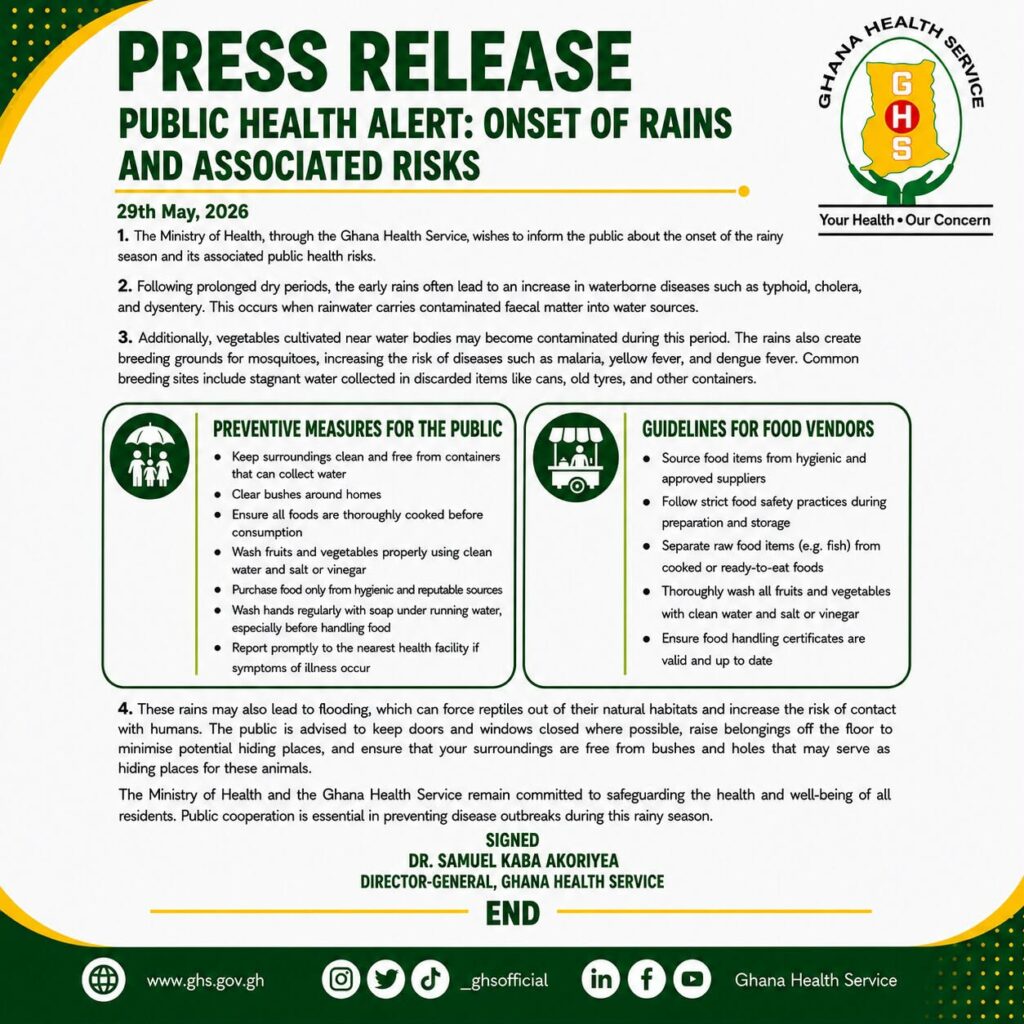

The Ministry of Health, through the Ghana Health Service (GHS), has informed the public about the onset of the rainy season and its associated public health risks.
The GHS said in a notice that following prolonged dry periods, the early rains often lead to an increase in waterborne diseases such as typhoid, cholera, and dysentery.
This occurs when rainwater carries contaminated faecal matter into water sources, it said.
Additionally, it added, vegetables cultivated near water bodies may become contaminated during this period.
“The rains also create breeding grounds for mosquitoes, increasing the risk of diseases such as malaria, yellow fever, and dengue fever. Common breeding sites include stagnant water collected in discarded items like cans, old tyres, and other containers,” the notice said.
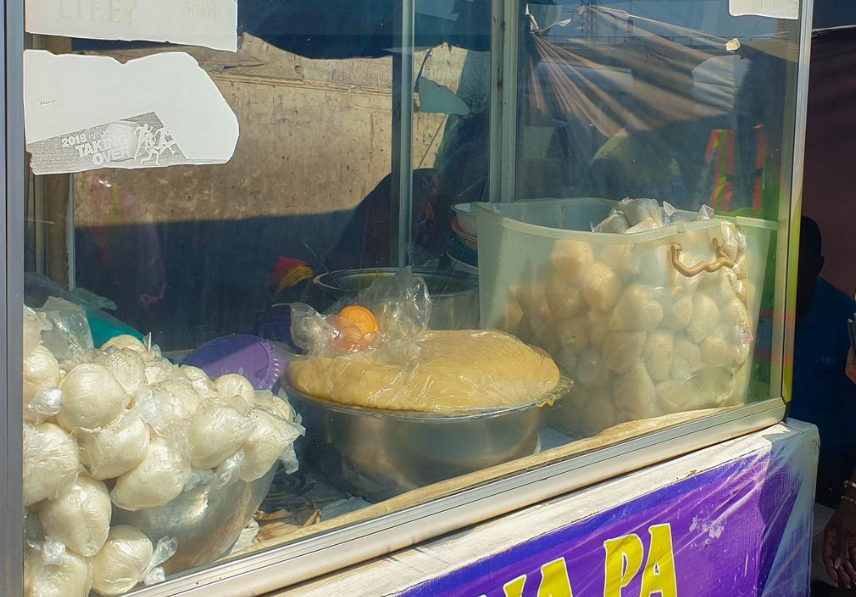
Guidelines for food vendors
- Source food items from hygienic and approved suppliers
- Follow strict food safety practices during preparation and storage
- Separate raw food items (e.g. fish) from cooked or ready-to-eat foods
- Thoroughly wash all fruits and vegetables with clean water and salt or vinegar
- Ensure food handling certificates are valid and up to date