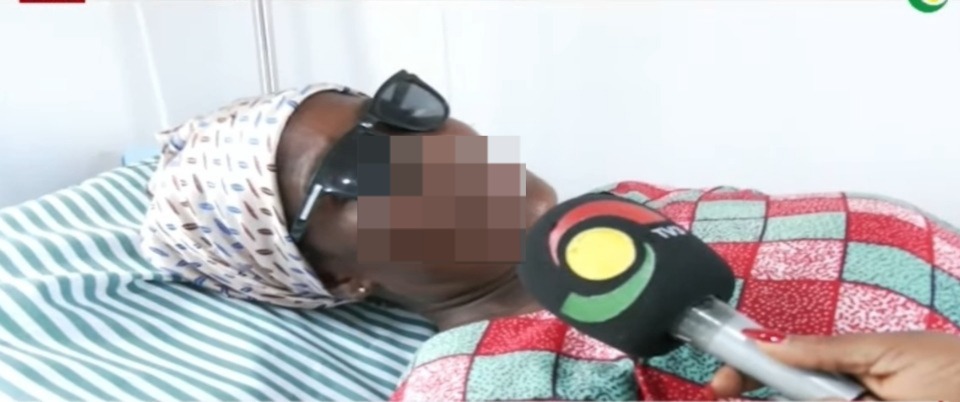

Even before government’s Free Primary Health Care programme will take off in about 150 districts, 53-year-old Beatrice Elikplim was the first test of the system.
The timely intervention of the health workers at the Free Primary Healthcare post stationed at the Dodowa Hospital saved her life.
The news team met Beatrice Elikplim shortly after she walked to the new facility at the Dodowa District Hospital to check her vitals following the launch by President Mahama.
Her blood pressure reading was dangerously high, prompting the health worker to immediately activate the telemedicine system, connecting her to a doctor via Zoom for consultation.
After the consultation, she was kept under observation.
‘‘They are doing a good job. I spoke to the Doctor and she says they should detain me.’’
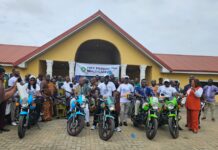
Government says similar standard health posts will be replicated in communities, with services also provided through CHPS compounds, polyclinics and mobile outreach teams for convenient access.
For Nurse Gloria Sarkodie Addo the early detection has prevented a possible emergency.
“Her BP was 200/100mmHg. That’s not good at all. These are the incidents that lead to sudden crisis so this free primary healthcare initiative is good and here to save everyone,” she said.
A blood pressure (BP) reading of 200/100 mmHg is classified as a hypertensive crisis and is a medical emergency. It indicates that one’s blood pressure is high enough to cause immediate damage to organs such as the heart, brain, or kidneys.
The Free Primary Healthcare Programme is expected to remove financial barriers to basic services, promote early treatment, strengthen preventive care and reduce congestion at higher-level facilities.
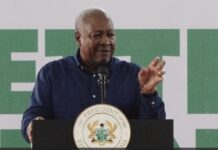
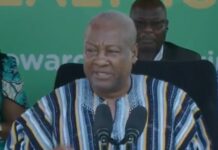
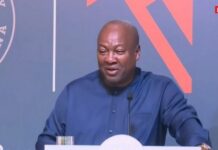
President Mahama, during the launch, urged the public to prioritize healthy lifestyles, including proper eating habits.
‘‘NCD’s burden in the country remains high in Ghana so one of the reasons for the primary healthcare is to prevent the disease. So it will educate people on the lifestyle choices that is influencing this NCD’s. Some of you eat very late. You don’t exercise too. Please don’t eat after 7pm,’’ the President advised.
The World health Organization (WHO) Country Representative to Ghana Dr. Fiona Braka says the policy places the country on track toward achieving universal health coverage.
Government projects the phased rollout to cost about 1.2 billion cedis annually, beginning with 150 districts, particularly underserved communities, before expanding nationwide.
By Sarah Apenkroh