
The water was once clean. Years ago, children swam in it after school. Women fetched it for cooking. Farmers depended on it for their crops. The river gave life to the community.
Today, the same river looks brown and sick. Mud covers the surface. Dead fish float in the water. People no longer trust it for drinking.
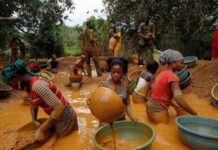
This is the painful reality in many parts of Ghana because of illegal mining, popularly known as galamsey.
For years, governments have promised to fight galamsey. Leaders have made speeches. Security forces have carried out operations. Excavators have been seized and arrests made.
Yet the destruction continues.
The truth is that galamsey is no longer only an illegal mining problem. It has become a national crisis involving poverty, unemployment, weak governance, and survival.
The Ghana Water Company Limited has warned in recent years that galamsey pollution has made water treatment extremely difficult, with rising turbidity levels in major rivers increasing treatment costs and threatening water supply systems across the country.
The Environmental Protection Agency (EPA) has repeatedly stated that illegal mining is causing serious environmental and health risks due to mercury and cyanide contamination in water bodies. These warnings have been made in public statements and national enforcement updates in recent years, especially during intensified anti-galamsey campaigns.
In 2025, the EPA further warned that if illegal mining continues at its current pace, Ghana could face long-term water insecurity and severe pressure on its national water systems.
In many mining communities, young people see galamsey as their only hope for survival. Some are unemployed graduates. Others are school dropouts struggling to support their families.
The Ghana Statistical Service has consistently reported that youth unemployment and underemployment remain major national challenges, especially among people aged 15 to 35. Many young people therefore end up in informal work because formal jobs are not enough.
As the cost of living rises and job opportunities remain limited, galamsey becomes attractive because it offers quick money.
Many young people today feel trapped between education and survival.
In several mining communities, students who once dreamed of becoming teachers, nurses, engineers, and professionals are now found in galamsey pits or betting centres just to survive.
Recent national discussions on youth unemployment in Ghana, including public policy debates and civil society reports, have highlighted this shift where many young people are moving from education into survival-based activities due to job shortages and economic pressure.
This is one of the saddest parts of Ghana’s galamsey crisis.
The country is not only losing forests and rivers. It is also losing the dreams of its young people.
In mining towns such as Tarkwa, Obuasi, Dunkwa, and parts of the Western North Region, illegal mining has become part of daily life. In these areas, some children now see quick money from galamsey as more attractive than schooling. Teachers and local leaders in these communities have repeatedly raised concerns about school dropout rates linked to mining activities.
This reveals a hard truth: many people in galamsey are not just criminals. Many are ordinary citizens trying to survive.
A researcher from the University of Ghana has noted in environmental and development studies that illegal mining often grows fastest in areas with high unemployment and weak local economies, where people feel excluded from national development and opportunity.
This does not justify the destruction. But it helps explain why the problem continues.
The environmental damage is severe.
The Water Resources Commission has consistently warned that Ghana’s major rivers—including the Pra, Offin, Ankobra, and Birim—are heavily polluted due to illegal mining. These rivers now face serious stress, affecting drinking water, farming, and fishing.
The Forestry Commission has also reported that illegal mining has destroyed thousands of hectares of forest reserves, including protected areas that are difficult to restore.
The EPA continues to stress that mercury exposure and land degradation pose long-term health risks, including contamination of food chains and water sources.
If this continues, Ghana could face serious water shortages and food insecurity in the future.
Beyond the environmental crisis lies another issue: politics and trust.
Many Ghanaians believe politically connected individuals benefit from illegal mining while small miners are arrested. This perception is widely discussed in public debates and has been repeatedly raised by civil society organisations, environmental activists, and anti-corruption groups who argue that enforcement is often selective.
In 2024, Archbishop Nicholas Duncan-Williams described galamsey as a national emergency and warned that Ghana risks destroying its own future if leaders fail to act decisively. His statement added to growing concern among religious leaders and civic voices.
Public frustration is also visible in media discussions, community conversations, and public forums, where citizens frequently question why enforcement appears inconsistent and why powerful actors behind illegal mining are rarely held accountable.
These concerns show a growing fear that Ghana is slowly destroying itself.
Government efforts to reclaim forest reserves and strengthen enforcement are important. But they are not enough.
Soldiers may remove illegal miners today, but if unemployment and poverty remain, they will return tomorrow.
This means Ghana must fight galamsey on multiple fronts.
The country needs stronger law enforcement. But it also needs jobs, skills training, and real economic alternatives for young people.
Mining communities need better schools, agriculture support, and small business opportunities.
At the same time, the law must apply equally to all. No political protection should shield those who destroy the environment for profit.
Galamsey is no longer just about gold. It is about survival, leadership, and the future of Ghana.
A country can survive economic hardship. It can survive political disagreement. But when its rivers die, its forests disappear, and its youth lose hope, the damage becomes deeper than politics.
The tragedy of galamsey is not only what it destroys underground. It is what it reveals above ground—poverty, weak institutions, inequality, and a nation struggling between survival and sustainability.
Until Ghana addresses these deeper issues, the fight against galamsey may remain a battle it continues to lose.
And if the rivers continue to die, Ghana’s future may slowly die with them.
By Collins Adjei Kuffuor