
For 20 years, the Bono Region had waited for its first Ghana’s Most Beautiful (GMB) crown.
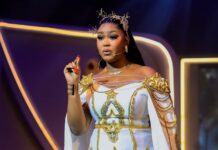
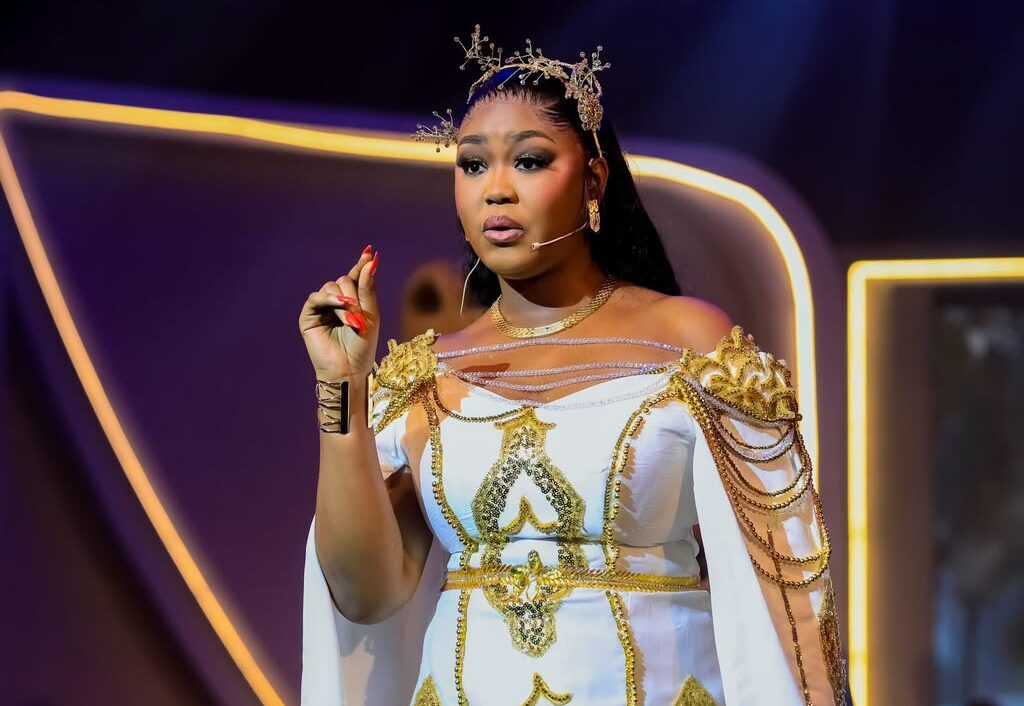
On Sunday night, October 18, 2026, Nana Konadu Nhyiraba Obeng ended that wait, winning the competition after a memorable journey that culminated in a powerful opening performance celebrating the Region’s identity, heritage and people.
The 20-year-old from Dormaa Ahenkro did more than entertain the audience. She used the grand finale stage to confront a stereotype, challenge the mockery of the Bono accent and remind Ghanaians that the way people speak should never determine how they are perceived.
Her message was simple yet bold and powerful: an accent does not define intelligence, and no one should ever be made to feel inferior because of the language they speak.
A performance that challenged a stereotype
Konadu’s opening act drew inspiration from the experiences of people from the Bono Region, whose accents and expressions are sometimes imitated for comic effect.
With confidence and conviction, she asked a question that challenged the audience to reflect on the impact of such ridicule.
“You have heard our songs and laughed, and sung along. But have you ever sat to wonder how the people feel when our accent and language are constantly the subject of mockery and ridicule?” she asked.
She challenged the tendency to turn the Bono accent into a source of entertainment, insisting that the Region’s voice deserved respect rather than ridicule.
“Our voice and accent should not be used to mock us and serve as a means of entertainment,” she declared.
Then came another compelling question: “You have heard how we speak, but have you ever listened to what we have to say?”
It was a defining moment in the performance, shifting the conversation from how the people of Bono sound to what they have to offer.
From mockery to pride
Konadu’s message resonated particularly with young people who may have been made to feel uncomfortable or embarrassed about their accents.
She highlighted the experience of young girls who know the answers in class but remain silent for fear of being laughed at when they speak.
In spaces where they should feel safe enough to express themselves, she explained, some are instead mocked for the way they pronounce words, including expressions such as “bɛɛbɛ.”
Her appeal to them was clear: never allow another person’s laughter to silence your voice.
She urged the people of Bono to embrace their language, culture, history and heritage, making the case that there was nothing to be ashamed of in the identity they carried.
A history too rich to be reduced to an accent
To reinforce her argument, Konadu took the audience on a journey through the history and achievements of the Bono people.
She invoked the legacy of the ancient Bono Kingdom and Bono Manso, highlighting the Region’s historical significance and its connections to major trading centres, including Djenné, Gao and Timbuktu.
She then turned to Wenchi, the hometown of Professor Kofi Abrefa Busia, Ghana’s Prime Minister during the Second Republic.
“Is this a region you should judge because of how we sound?” she asked.
Her next stop was Berekum, where she referenced the achievements of footballer Emmanuel Agyemang Badu, whose decisive penalty helped Ghana win the 2009 FIFA U-20 World Cup.
Again, she challenged the audience to consider whether a region with such achievements deserved to be ridiculed because of its accent.
“No!” was the emphatic response her argument demanded.
From history to contemporary achievements, Konadu made a compelling case that the Bono Region’s contributions to Ghana’s development could not be dismissed because of how its people spoke.
She also referenced the achievement of a top-performing student from Notre Dame Senior High School, using the example to reinforce her message that talent and intellectual ability could emerge from the very communities whose accents were sometimes mocked.
“Maybe history will not be enough, so let me let the facts speak,” she said.
“You cannot in any way use our accent to define our intellectual capacity or our mental acuity.”
The hands that feed the nation
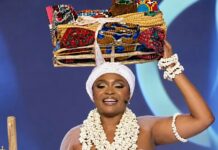
One of the performance’s strongest moments came when Konadu turned to the Region’s agricultural contribution.
Often described as one of Ghana’s food baskets, Bono is home to farmers whose work helps feed households across the country.
Konadu challenged the audience to reconsider the ridicule directed at the people behind that contribution.
“That farmer you are laughing at is probably the one who puts food on your table. Why should you be ashamed of the hands that put food on your table?” she asked.
The question brought her argument closer to everyday life, connecting the dignity of the Bono people to the food Ghanaians consume and the livelihoods that sustain communities.
She also referenced the Adinkra symbols associated with Ghana’s cultural heritage, invoking the tradition linked to Nana Adinkra to underline the depth of the Region’s cultural identity.
Her message was not that the people of Bono needed to change how they spoke to earn respect. Rather, it was that their accent was an inseparable part of an identity they had every reason to celebrate.
“I came here to change a narrative. I came here to tell you that we are proud of the accent we carry because it in no way defines who we are as a people,” she said.
She brought the performance to a close with a message that extended beyond the Bono Region.
“Behind every accent is a human being, behind every language and voice is a heritage, and behind every stereotype is a story waiting to be told.”
It was a fitting conclusion to an act built around dignity, belonging and the power of representation.
A commanding stage presence
The message was matched by a confident stage performance that drew loud cheers from the audience.
Linda Ampah, GMB’s longest-serving judge, praised Konadu’s delivery, confidence and stage presence, noting that she was in control of the act and looked graciously beautiful.
The performance demonstrated the qualities expected of a Ghana’s Most Beautiful queen: confidence, cultural awareness, eloquence and the ability to use the platform to communicate a message with wider social relevance.
For Konadu, the grand finale was the culmination of a journey marked by growth, resilience and a determination to become the best version of herself.
A former student of Wesley Girls’ High School, she is currently a Level 400 student of Communication and Media Studies at the University of Professional Studies, Accra (UPSA).
Her opening act offered a glimpse of a contestant who understood that the GMB stage was not simply a platform for competition, but also an opportunity to tell stories, challenge perceptions and celebrate the diversity of Ghanaian identity.
From a powerful message to a historic crown
Konadu’s opening performance set a strong tone for her final-night campaign, but her victory was not built on the act alone. She also secured the votes needed to finish ahead of the other five finalists, combining audience support with her performance on the night.
Her eventual triumph made her the first contestant from the Bono Region to win the Ghana’s Most Beautiful crown in the pageant’s 20-year history.
She beat competition from Sessinam, Ampomaa, Tiwaa, Lamiley and Ayinbomaa.
The first runner up was Sssinam, who received GHC100,000, while Ampomaa placed third. She got GHC50,000 and sponsors’ souvenirs as her prize.
Beyond the title, she received a GH₵200,000 cash prize, an MG ZS Deluxe Edition vehicle , the bragging right and of course , other benefits that accompany the ultimate prize.
For the Bono Region, the victory marked the end of a two-decade wait. For Konadu, it was the reward for a journey that brought her to the national stage and gave her an opportunity to speak to a wider audience about the dignity of her people.
And perhaps that is what made her opening performance particularly memorable.
She did not ask Ghanaians to admire the Bono accent because it sounded a certain way. She asked them to listen beyond it — to the history, achievements, culture and humanity of the people who speak it.
On a night when she was competing for the ultimate crown, Nana Konadu also delivered a message that extended far beyond the pageant: no accent should ever be a reason to silence a people, diminish their intelligence or make them ashamed of who they are.
With her historic victory, she gave the Bono Region its first GMB queen and turned a personal ambition into a moment of collective pride.
Who is Nana Konadu? The 20 year old who made GMB history for Bono Region
By Joseph Owusu Worae