
Former Finance Minister, Dr Mohammed Amin Adam has disputed claims that Ghana’s 2025 foreign exchange reserve accumulation was driven by the Gold Purchase Programme.
He argued that the reserves were primarily built from other sources of foreign exchange inflows.
According to Dr Amin Adam, Ghana’s foreign exchange reserves in 2025 came largely from remittances, cocoa exports, crude oil exports, foreign direct investment and IMF disbursements.
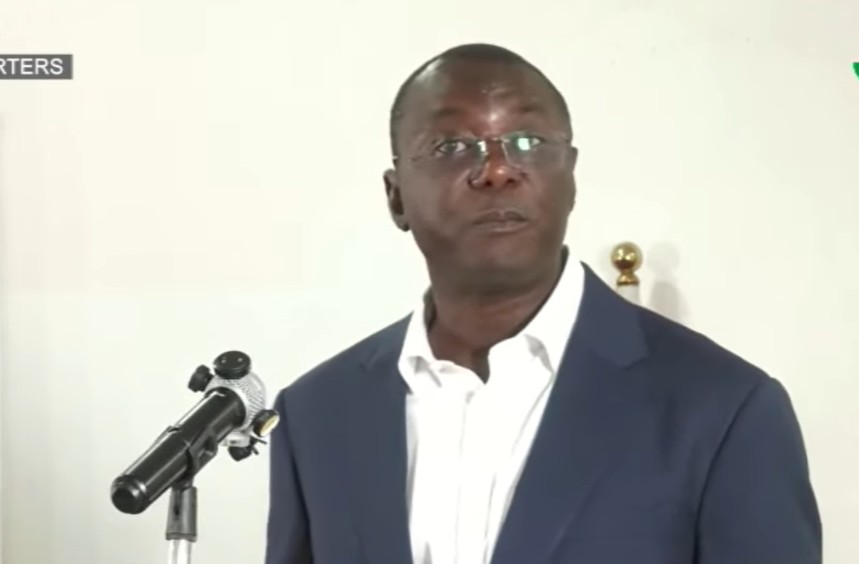
Speaking at a press conference held at the NPP Headquarters on September 1, he said remittances contributed US$7.7 billion, cocoa export earnings US$3.8 billion, crude oil exports US$2.6 billion, foreign direct investment US$2.6 billion and IMF disbursements US$752 million.
“The entire 2025 forex reserves came from remittances, $7.7 billion, cocoa export earnings, $3.8 billion, crude oil export, $2.6 billion, Foreign Direct Investment, $2.6 billion, IMF disbursement, $752 million,” he said.
Dr Amin Adam argued that these figures demonstrate that the Gold Purchase Programme was not responsible for building Ghana’s foreign exchange reserves.
“This is where the reserves came from, not from the Gold Purchase Programme which was intended to build our reserves,” he stated.
He further cited figures from the International Monetary Fund (IMF), which he said showed that foreign currency inflows linked to the Gold Programme amounted to US$10.9 billion in 2025, but the Bank of Ghana subsequently sold about US$10.6 billion back into the local foreign exchange market.
According to him, the movement of the funds meant the programme operated primarily as a foreign exchange market intervention rather than as a mechanism for accumulating reserves.
“The IMF also notes that foreign currency inflows linked to the Gold Programme in 2025 were $10.9 billon but the Bank of Ghana sold $10.6 billion straight back into the local currency market.
“How then can you tell me that you build the reserve?” he questioned.
Dr Amin Adam said the programme effectively involved purchasing gold at a loss and using the resulting foreign exchange to support the cedi.
“In practice, what has happened is that the programme functioned as a Foreign Exchange market intervention, buying gold at a loss to support the cedi. That is exactly what they did and not the original objective of the programme,” he said.
“So, ladies and gentlemen, the programme did not build our reserves,” he concluded.