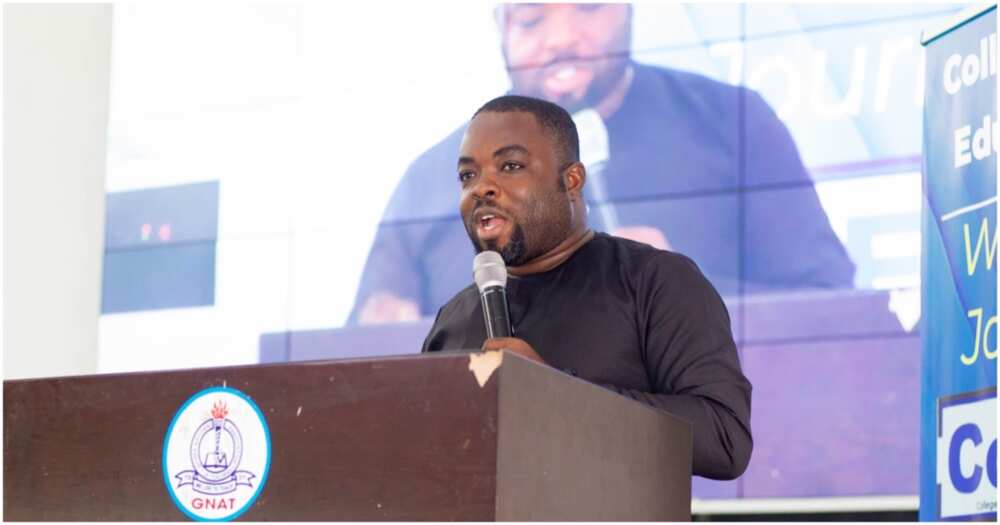

Executive Director of the Institute for Education Studies (IFEST-Ghana), Dr. Peter Partey Anti, has described government’s plan to end the double-track system by 2027 as unrealistic.
He made the remarks in an interview on Tuesday, July 28, 2026, following the presentation of the Mid-Year Budget Review, during which government reaffirmed its commitment to ending the double-track system through a $300 million World Bank-funded education infrastructure project.
According to Education Minister Haruna Iddrisu, the Secondary Education Improvement Project under the STARR-J programme will involve the expansion of infrastructure through 210 interventions, the construction of 10 new schools, and the rehabilitation of 150 existing senior high schools.
Reacting to the announcement, Dr. Partey Anti argued that the timeline set by government is not feasible.
“When you do the analysis, we say that the government’s plan to end the double-track system in 2027, as mentioned by the President and the Minister of Education, is not feasible. We are already in the middle of 2026, and the World Bank facility has only just been approved.
We still have to go through procurement processes, award contracts and undertake other preparatory activities. By the time those are completed, we will be close to 2027. It is not possible to build and expand secondary school infrastructure within the one-and-a-half years remaining.
Government may be able to meet the target if it secures additional sources of funding. However, based on comments by both the Minister of Education and the Minister of Finance, the plan to end double-track appears to be solely dependent on this infrastructure expansion project. Therefore, we believe it is highly unrealistic for the system to be phased out by 2027.”
Despite the concerns, education authorities remain confident that the target can be achieved through ongoing infrastructure expansion across the country.
Press Secretary to the Minister of Education, Hashim Mohammed, dismissed the criticism, insisting that the timeline is realistic and that procurement processes will begin soon.
“It is not unrealistic. It is realistic. Very soon the procurement processes will begin because we have secured Cabinet approval and Parliamentary approval.
“In many schools, the required upgrades are not extensive. Some only need additional furniture. If procurement is handled efficiently and the right contractors are engaged, acquiring furniture and carrying out renovation works should not take a long time.”
Hashim said the Ministry remains optimistic about meeting the deadline.
“We are very optimistic that we will be able to work within the timeframe and end the double-track system as promised.”
He added that the government’s strategy extends beyond infrastructure development and includes teacher training, learning resources and instructional materials to ensure quality secondary education across the country.
By Beatrice Sowah