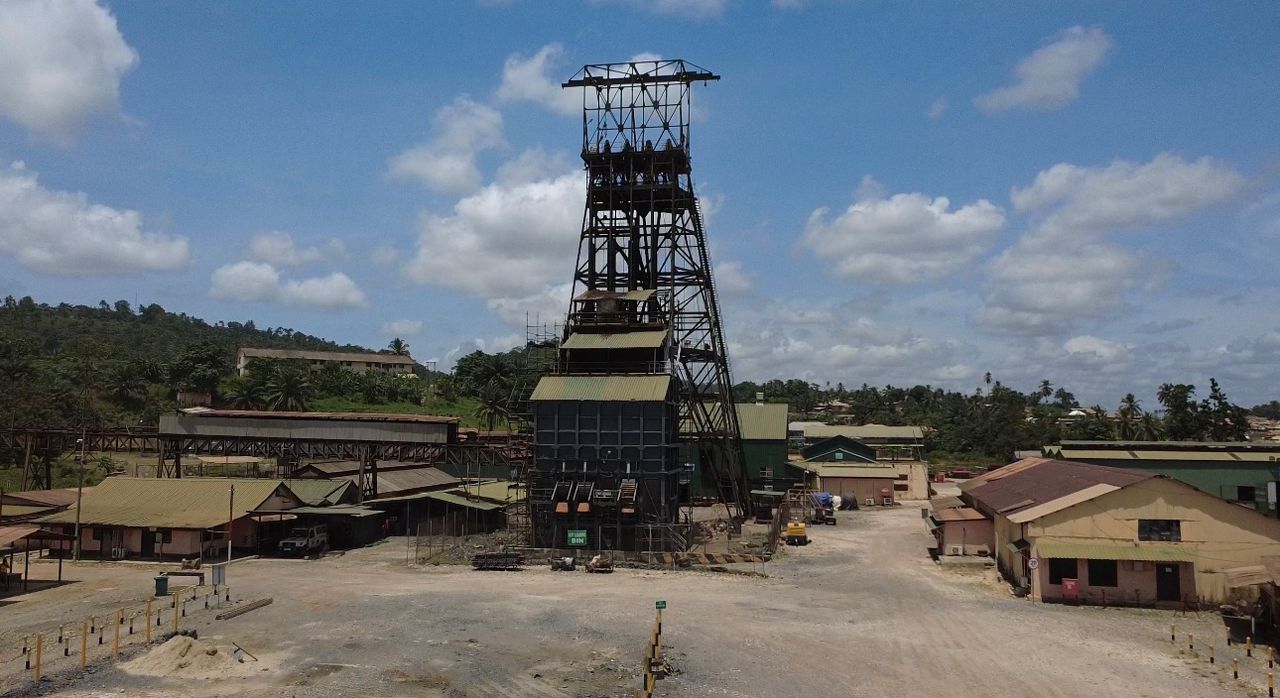

In Ghana’s Western Region, the conversation around mining is no longer just about conflict—it’s about collaboration.
Following new government directives that compel large-scale miners to support local communities, Heath Goldfields has released portions of its concessions to local youth through the Lands Ministry. For the beneficiaries, this is the empowerment they have been waiting for.
Just months ago, these same lands were flashpoints for illegal mining tensions. Today, they are becoming classrooms for responsible extraction.
Abdullah Raphael Yakubu, a resident of one of the host communities, remembers the old days well.
“Initially, when the company arrived, the communities were not on good terms with them due to their structure. However, over the past one and a half months, the company has implemented a system that benefits both the company and the host communities. As a result, there is currently no agitation on either side. They are working smoothly,” he said.
He is quick to point out the type of mining involved:
“In this area, we do not engage in alluvial mining. We do rock mining underground. Through the Ministry, the company has given us part of their concessions to operate in the Bogoso, Dumase, Bondaye, and Prestea communities. So at the moment, there is no problem between both parties,” he said.
On Monday, April 27, community members held a solidarity walk through Prestea to show gratitude to Heath Goldfields for ceding ground for responsible, cooperative community mining. It was a rare scene: miners and company representatives walking side by side.
At the event, the former Member of Parliament for Prestea-Huni Valley, Francis Kwasi Blay, addressed the artisanal small-scale miners directly. His message was firm but fair:
“Over the years, the friction between the communities and the companies mining here has resulted from the communities having no area to work. So I am pleading with the leadership of the artisanal small-scale miners: going forward, we will sit down with them. They should educate their members not to trespass. If they go to the mining area and the company arrests them, nobody will come and pay their bail. Therefore, we are going to ensure strict adherence to the rules and regulations of the mining industry.”
His words drew nods from the crowd. For many, having a legal place to mine is a new privilege—and with it comes responsibility.
The concessions come with strict environmental and safety protocols. Heath Goldfields is providing technical oversight, ensuring the youth use mercury-free methods and properly reclaim exhausted pits.
For the company, this isn’t just charity it’s a strategic move to legitimize local operations while curbing the environmental damage of independent illegal mining.
Nana Kwabena Tenkorang, Chief of Prestea Nsuoakyi, added his voice to the call for caution:
“I learned there is a committee that involves the mining company and the small-scale miners to ensure that all safety protocols are put in place. I am also pleading with my people to be conscious and work according to the safety procedures that will be given to them, so that we will not have any casualties.”
It’s a simple but powerful message: no one wants to see a life lost in pursuit of gold.
Perhaps the most telling detail? The group has already pledged 5% of weekly proceeds to a community health fund proof, they say, that gratitude is best shown through action.
In an industry often defined by exploitation and environmental harm, this small-scale experiment in co-management offers a rare glimpse of what’s possible when both sides choose dialogue over confrontation.
For now, in the mining towns of Prestea, Bogoso, Dumase, and Bondaye, the earth is still yielding its treasure but this time, without the sound of shouting.
By Ebenezer Atiemo