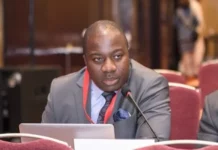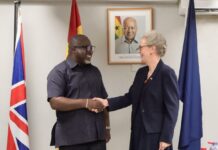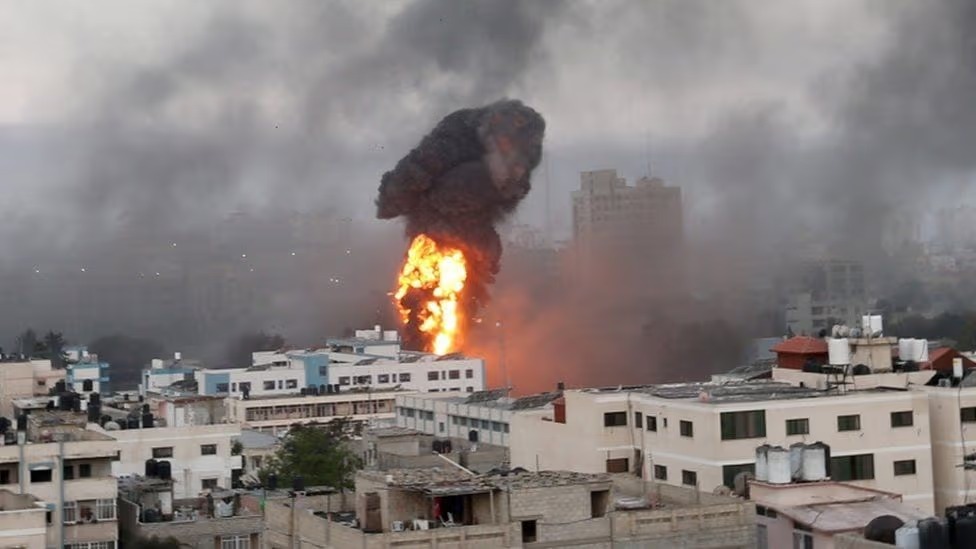

The Ambassador of Israel to Ghana, Roey Gilad, says the ongoing military campaign against Iran is aimed at preventing the country from developing nuclear weapons and weakening its missile capabilities.
Speaking at a news conference in Accra on Thursday, March 5, 2026 ahead of Ghana’s 69th Independence Day celebrations, Gilad said the operation described by Israel as “Operation Roaring Lion” was launched jointly by Israel and the United States on February 28, 2026.
According to the ambassador, the operation has three main objectives: preventing Iran from acquiring nuclear weapons, degrading its ballistic missile capability, and creating conditions for the Iranian people to determine their political future.
Gilad said the renewed military campaign came months after a previous 12-day confrontation in June, which Israel believed had slowed Iran’s nuclear ambitions.
However, he claimed Iranian authorities resumed efforts to develop nuclear weapons and moved critical facilities deeper underground to avoid possible airstrikes.
“When the intention to destroy the State of Israel meets the capability to do so, this is when we become nervous and act to pre-empt the danger,” he said. The Ambassador also accused Iran of expanding the conflict across the Middle East by targeting several Gulf states, including the United Arab Emirates, Saudi Arabia, Qatar, Bahrain, Kuwait and Oman.
He further claimed Iranian missile strikes had reached areas such as Cyprus and Turkey, describing the attacks as an attempt to pressure regional governments to push Washington to end the war.
Gilad said Iranian-backed groups across the region including Hezbollah in Lebanon and the Houthi movement in Yemen form part of what he called a “ring of fire” around Israel.
According to him, Hezbollah joined the latest phase of the conflict on March 2 following the killing of Iran’s Supreme Leader, Ali Khamenei.
Providing figures on the impact of the conflict, the ambassador said Iran had fired more than 180 missiles and over 120 unmanned aerial vehicles at Israel as of March 4.
He said the attacks had killed 11 people in Israel and injured about 120 others.
“We pay a price and we will continue to pay a price,” Gilad said, adding that Israeli citizens have shown “stamina and resilience.”
The ambassador also acknowledged the presence of Ghanaian troops serving with the United Nations Interim Force in Lebanon (UNIFIL) in southern Lebanon.
He said Israel had requested UN peacekeeping units, including about 900 troops from Ghana, to remain in their bases temporarily to reduce risks as military operations continue near the border.
Despite the ongoing escalation, Gilad expressed hope that the current campaign could eventually lead to political change in Iran.
He stressed that Israel’s conflict is with the Iranian leadership and not the Iranian people.
“We have nothing against the Iranian people,” he said. “They deserve the same freedom that people in Ghana and Israel deserve.”
He also acknowledged uncertainty about how long the campaign could last, saying it may continue for several weeks.
By Evelyn Tengmaa