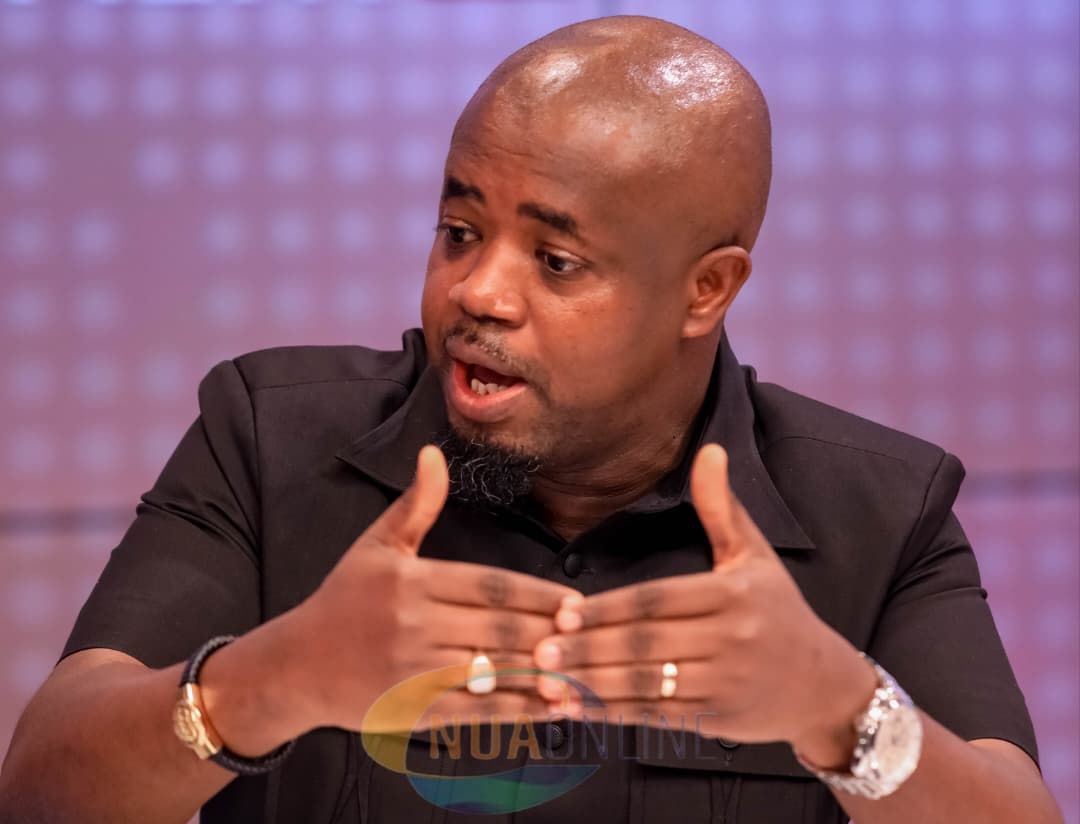

Chief Executive Officer of the National Petroleum Authority (NPA), Godwin Edudzi Tameklo, has disclosed that the nation’s available fuel stock can keep the nation running for the next few weeks should tensions in the Middle East escalate.
He says Sector Minister, Dr. John Abdulai Jinapor, following the ongoing tensions in the region, summoned a meeting between all energy sector heads and their technical leads to find ways of possibly mitigating the effect of the war on Ghana’s fuel supply and pricing.
According to him, the team discussed the availability of the product in the midst of the ongoing turmoil in the region, as well as its pricing.
“My proactive sector Minister, Dr. John Abdulai Jinapor, immediately summoned a meeting, which all the energy sector heads were all invited –myself, TOR, GNPC, BOST and all the technical heads to discuss ways by which we can possibly mitigate the impact of what is happening in the Gulf Region, particularly on Ghanaian consumption,” he said on the BigIssue segment of the NewDay morning show on TV3 Wednesday, March 4, 2026.
Edudzi added that “there were two things that we were looking at; impact in terms of supply, thus availability of the product, and here we are looking at energy security stand alone, and also pricing.”
Energy experts have predicted that the ongoing US-Israel war on Iran could affect global supply of oil and its prices, with prices at the pumps seeing some marginal upward adjustment following the escalation of the conflict.
The NPA boss said Ghana can survive for some few weeks with its available fuel should the war continue to affect global supply.
“What we know and where we sit is the fact that at least, for the next few weeks, we have what it takes to keep this country running. I wouldn’t say five, six or seven weeks but I can tell you that we have enough for some weeks,” he indicated.
When probed by host Roland Walker, the number of weeks in question, he said it could exceed four weeks.
Meanwhile, President John Dramani Mahama, had earlier cautioned that the ongoing conflict in the Middle East can lead to higher fuel prices and increased cost of living in Ghana if the situation spreads to the Gulf states.
During his bilateral talks with Tanzanian President Samia Suluhu Hassan on Tuesday, March 3, 2026, on the sidelines of the African Court on Human and Peoples’ Rights’ 2026 Legal Year in Arusha, Tanzania, President Mahama stated that the conflict involving the United States, Israel and Iran poses a risk to global oil supply, especially if counterattacks extend to Gulf states, which play a central role in energy production and transportation.
He noted that Ghana depends largely on imported crude oil and refined petroleum products, making the country vulnerable to global price changes.
According to him, any sustained increase in oil prices will reflect directly in fuel costs, transport fares, food prices and the general cost of doing business.
President Mahama said that instability in the Middle East could have wide economic effects, particularly for African countries that rely on imported fuel.
He added that recent tensions involving Gulf states, a major route for global oil shipments, have raised concerns about possible supply disruptions.
He pointed to the strategic importance of the Strait of Hormuz, a major shipping route through which a large share of the world’s oil supply passes daily, warning that any disruption to that route could trigger a sharp rise in global oil prices, with direct consequences for Ghana’s economy.
President Mahama said that such external shocks could affect ongoing efforts to stabilise inflation and the exchange rate following Ghana’s recent debt restructuring.
Why Iran–Israel tension is not ‘far away’ from Ghana and West Africa