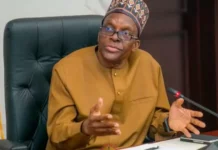

The Speaker of Parliament, Rt. Hon. Alban Sumana Kingsford Bagbin, has called for a sustained and institutionalized partnership among Parliament, academia and civil society organizations (CSOs) to strengthen economic governance and public financial management in the country.
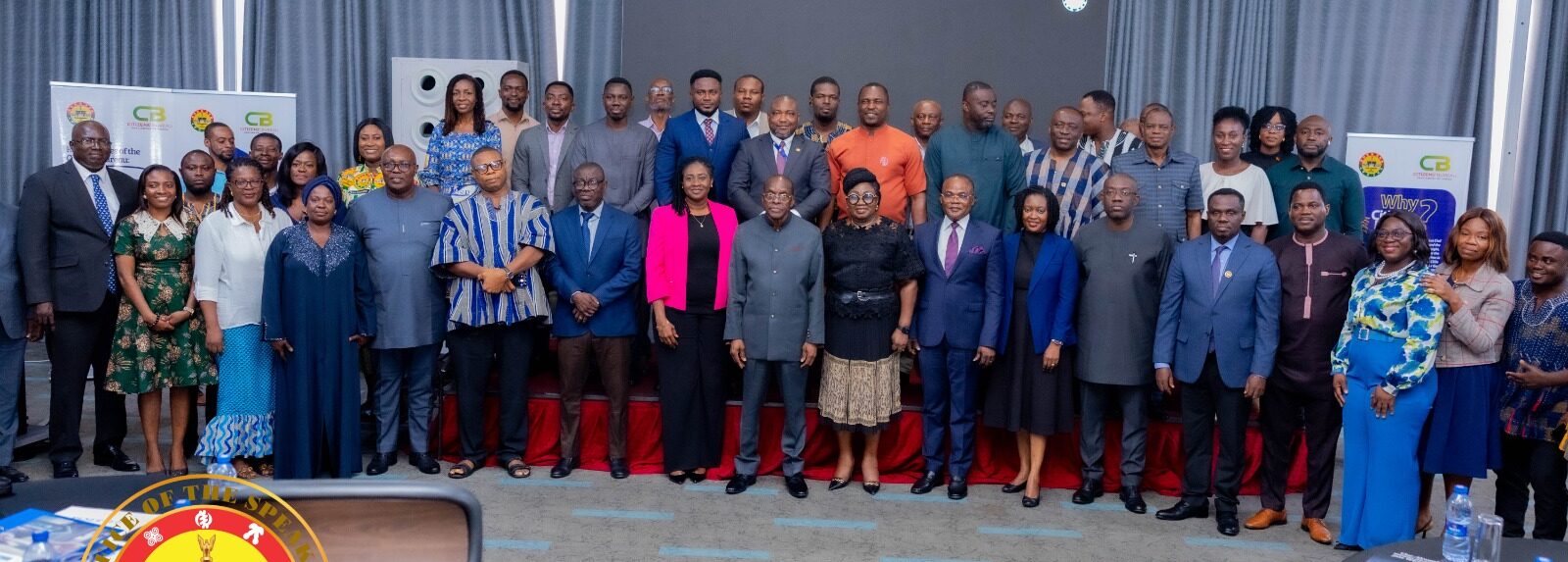
Speaking at the launch of the maiden Information-Sharing Session between Academia, Civil Society Organizations and Committees of Parliament in Accra on July 29, the Speaker said Parliament could no longer afford to operate in isolation from the research and evidence generated by academic institutions and the grassroots insights offered by civil society groups.
“Parliament cannot be the solo police of our purse,” he told the gathering, which included Members of Parliament, representatives of the World Bank and the United Kingdom Foreign, Commonwealth and Development Office, the Institute of Statistical, Social and Economic Research (ISSER), Academics, CSO Leaders, Diplomats and Journalists.
The Speaker explained that while Parliament exercises the constitutional mandate to make laws, approve national resources and hold the Executive accountable, academia generates the research and evidence needed to deepen understanding of national challenges, while civil society amplifies citizens’ voices and monitors the implementation of government programmes.
He noted, however, that structured collaboration among the three had historically been limited, resulting in valuable research not always finding its way into legislative deliberations.
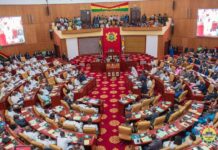
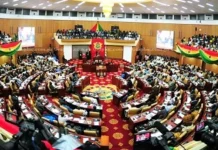
He described the timing of the session as significant, coming at a period when Parliament has begun considering the 2026 Mid-Year Fiscal Policy Review, and said effective oversight of the public purse required more than official government reports.
“As a Parliament, we only have to doze off for a second and government goes on a shopping spree at the expense of the fundamentals of life,” he cautioned, adding that an “untrained guard dog is a danger to even its master.”
Rt. Hon. Bagbin used the occasion to outline Parliament’s broader reforms towards openness and citizen participation, including the development of an Open Parliament Plan, the establishment of a multi-stakeholder Parliamentary Open Government Steering Committee, an electronic petitions platform, live broadcast of parliamentary proceedings, and Open Parliament Week.
He said the recent restructuring of the former Public Affairs Department into specialized directorates including the Citizens’ Bureau, Media Relations, Public Engagement, the Visitors’ Centre and Broadcasting reflects Parliament’s commitment to becoming more accessible and responsive to citizens.
He paid tribute to the Citizens’ Bureau, describing it as the institutional bridge that ensures Parliament remains informed by the experiences and aspirations of the people it represents, regardless of changes in leadership or government. “Institutions must endure beyond leaders,” he said, noting that Speakers and governments change, but the relationship between Parliament and the people “must remain constant.”
The Speaker urged parliamentary committees particularly the Committee on Economy and Development, the Budget Committee, and the Committee on Independent Constitutional Bodies to treat the engagement not as a one-off event but as the start of a continuous institutional relationship with academia and CSOs. He also called on academic and civil society partners to continue providing timely, objective and policy-relevant research while holding public institutions, including Parliament, to high standards of transparency and accountability.
Rt. Hon. Bagbin commended the Citizens’ Bureau for organizing the session, and thanked ISSER, the World Bank, the UK Foreign, Commonwealth and Development Office, and participating academic and civil society institutions for their support. He expressed confidence that the partnership launched would evolve into a lasting one that enriches parliamentary deliberations and contributes to sound economic governance “for the benefit of present and future generations.”
Source: PR Unit of Parliament