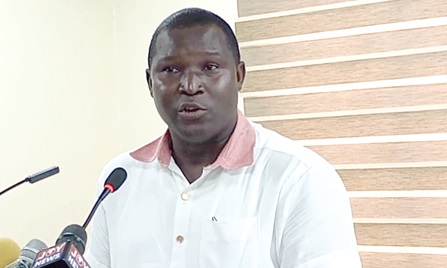

Daryl Bosu, Deputy National Director of A Rocha Ghana –a non-governmental organisation dedicated to practical nature conservation –has said protection of forest reserves exists only in speeches and not on the ground.
He says despite commitments to protect the country’s forest reserves, the situation on the ground is different.
According to him, the challenges those tasked to protect the nation’s forest reserves are facing are huge, despite stated efforts by governments to protect these reserves.
Bosu, speaking on a recent confrontation between illegal miners in the Atewa Forest leading to the severe injury of one person on TV3’s Ghana Tonight on Monday, August 17, 2026, said those comments on protecting forest reserves are just for optics.
“Forest reserves are protected was only made just in speeches,” he stated.
“But on the ground, the Forestry Commission was left to battle it out. They’ve been talking about inadequate resources, inadequate men on the ground.
“So to just say forest reserves are protected, security zones, no-go zones, that was just for the speeches and for the optics and for the cameras. Because if you go on the ground, there are serious challenges,” he added.
His comments follow an intervention by the National Anti-Illegal Mining Operations Secretariat (NAIMOS) Special Task Force in a violent clash involving suspected illegal miners operating in the Atiwa Forest Reserve in the Eastern region.
The incident occurred in the Abuakwa South district and reportedly involved the use of machetes, leaving one person seriously injured.
The Task Force stepped in before the confrontation could escalate further. The injured person was first taken to the Asiakwa Police Station and later referred to a medical facility for treatment.
Following the incident, the NAIMOS team conducted a reconnaissance patrol in the forest reserve to assess the extent of illegal mining and its impact on the environment.
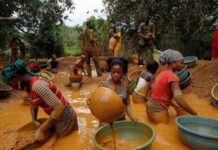
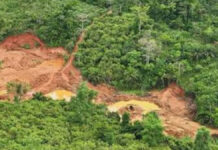
The patrol found widespread illegal mining activities along river systems in the reserve, with several areas showing significant environmental degradation.
The team also encountered difficult terrain, including steep and rugged areas that could not easily be accessed by conventional vehicles. In many parts of the reserve, movement was possible mainly on foot, motorcycles and tricycles.
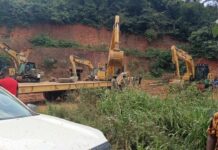
Although no arrests were made during the operation, the Task Force destroyed 15 makeshift structures and 11 water-pumping machines believed to have been used for illegal mining.
Information gathered from residents also indicated that a large number of illegal miners may still be operating within the reserve.
NAIMOS has since begun further investigations into the mining activities and the circumstances surrounding the violent clash.
The Secretariat said it would intensify operations in the Atiwa Forest Reserve and surrounding communities to disrupt illegal mining, protect water bodies and prevent further damage to the environment.