
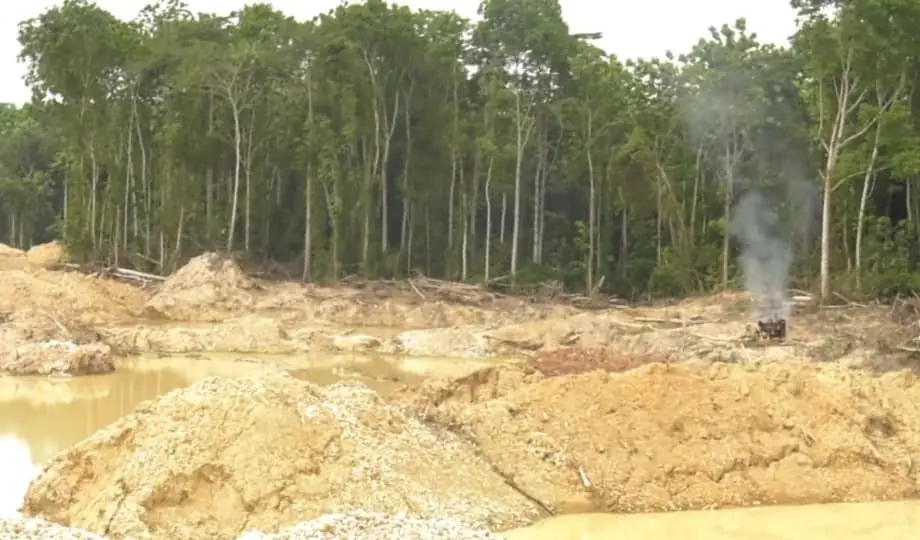
Illegal mining, or galamsey, has plagued Ghana since the 1980s and 1990s, growing into an existential threat to our environment, water bodies, and national sovereignty. Despite a series of regulatory and militarized efforts over the years, the menace continues unabated, often escalating in scale and sophistication.
In 2006, the Minerals and Mining Act (Act 703) provided a clearer regulatory framework for mining. Yet enforcement remained weak, and illegal mining operations often involving foreign nationals thrived.
The first major, formal crackdown came in 2013 under President John Dramani Mahama, with the inauguration of an Inter-Ministerial Task Force. This joint military and police operation aimed to: Arrest illegal miners, Deport foreign operatives, Protect critical water bodies such as the Pra, Ankobra, and Birim, and Reclaim degraded lands.
However, this effort failed to yield lasting results.
In 2017, President Nana Addo Dankwa Akufo-Addo launched Operation Vanguard, another joint military-police task force. The government took the bold step of placing a temporary ban on all small-scale mining, including licensed operations, to sanitize the sector. This was followed by Operation Halt and a series of legal and policy reforms.

Despite these, the galamsey crisis persisted largely because the interventions failed to address the socio-economic factors that fuel illegal mining. In response, the government introduced the National Alternative Employment and Livelihood Programme (NAELP) in 2021, aimed at offering alternative livelihoods in agriculture, skills training, and sustainable mining support services. Still, illegal mining continues.
On Wednesday, August 6, 2025, Ghana was set to launch a new initiative under the theme: Responsible Cooperative Mining and Skills Development Programme (rCOMSDEP) in Obuasi. This program aimed to formalize artisanal mining and provide skills training as part of a more sustainable and regulated approach to mining.
Tragically, as the Ghana Air Force helicopter carrying senior government officials including the Minister of Defence and the Minister for Environment headed to the event, it crashed, claiming multiple lives and leading to the suspension of the launch.
As a security and environmental analyst who has monitored illegal mining for over a decade, I respectfully ask: What would this new program have achieved that previous ones did not?
The truth is painful: it likely would have met the same fate as its predecessors well-intentioned, but ultimately undermined by political interests and weak enforcement. In many cases, such programs have inadvertently emboldened illegal miners, offering a cover of legitimacy while the real criminal networks continue to flourish.
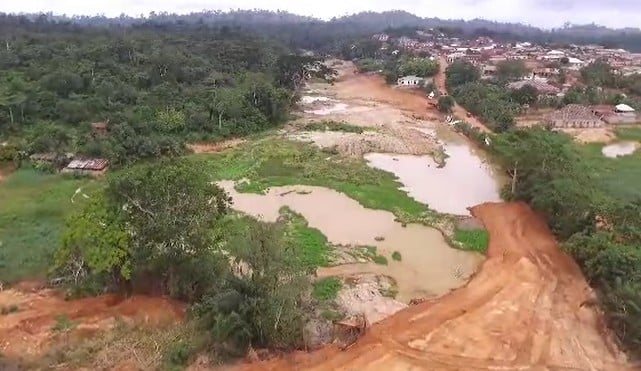
From a national security perspective, the time has come for Ghana to treat the fight against illegal mining as a direct threat to our sovereignty, and to tackle it head-on without fear or favor.
For too long, political calculations, especially around upcoming elections have weakened our national resolve to end galamsey. Politicians, seeking votes, often shy away from tough decisions, allowing illegal mining to become deeply embedded in our socio-political fabric particularly in election year.
That is why no number of new program launches will be sustainable, unless we fundamentally change our approach.
I propose the following:
Immediately dissolve all past and present task forces formed to combat illegal mining and protect water bodies. These fragmented and temporary initiatives have proven ineffective.

Establish a permanent military unit under the Ghana Armed Forces with constitutional authority and logistical backing to: Protect Ghana’s water bodies, Secure forest reserves, Dismantle illegal mining operations across the country.
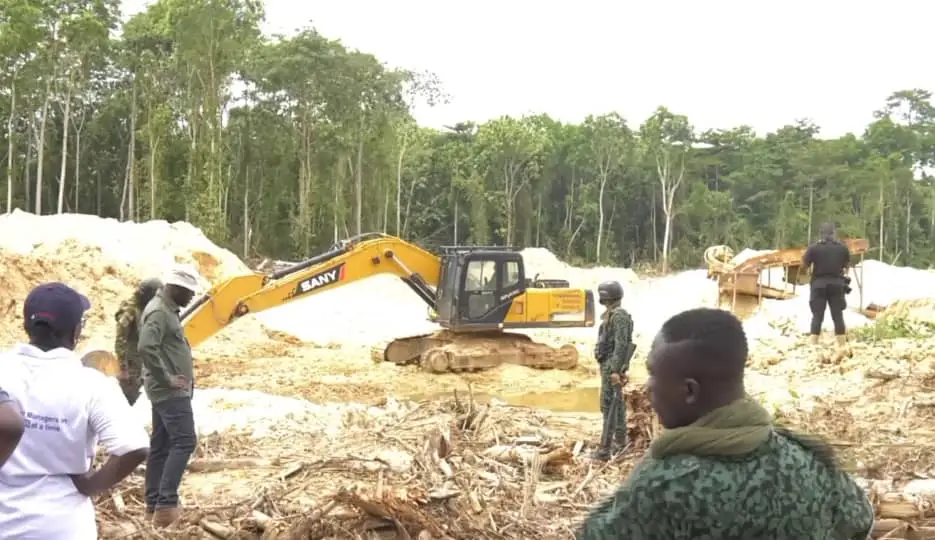
This Environmental Protection Command (EPC) or Natural Resource Protection Unit could function as a fourth specialized arm of the military, alongside the Army, Navy, and Air Force, or as a joint command drawing from all three.
Its mandate must be day-to-day environmental protection, not short-term operations. Its mission would be: Continuous surveillance of critical ecological zones, Real-time intelligence and enforcement, Coordination with the EPA, Minerals Commission, and local authorities.
Without our water bodies and forest reserves, Ghana cannot claim to be a sovereign state. The efforts of the Army, Navy, and Air Force to defend our borders and skies will be in vain if the rivers that sustain our people run dry, and our lands are left poisoned and barren.
The loss of key officials in the August 6 helicopter crash must be a wake-up call not only for the fragility of our political resolve but for the urgency of adopting a bold, security-led strategy that matches the scale of this crisis.
If we, as a nation, trust the Armed Forces to protect our borders, then we must also entrust them with the permanent protection of our natural resources.
This is a matter of national survival. Ghana needs to stop launching temporary programs and start building lasting security institutions to protect what remains of our environment.
Let us honor the memories of those who died in the line of duty not just with condolences, but with decisive action.