
My dear brothers and sisters,
Imagine the conceptualisation of the notion that humans, specifically black, well-built and strong humans, could be deemed chattels, reduced to numbered items and sold as slaves (beasts of burden), moved across oceans, packed in crates, shackled with heavy metal chains and transported by ships. Human beings, not animals. Think very carefully through this example even before you begin to imagine the sheer terror, the atrocities, the harsh weather conditions, the brutality meted out to those who resisted or tried to escape, the lives disrupted, the families displaced and, yes, the rights trampled.
This is the crime that all of us need the world to at least acknowledge as the gravest crime against humanity: the sale into slavery of human beings, specifically black men and women.
Introspection is necessary, but must it come at the expense of proportion?
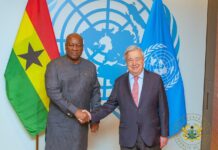
Let us be clear. What H.E. John Dramani Mahama achieved at the United Nations is not a token moment. It is a historic recognition that the transatlantic slave trade was a crime against humanity – systematic, global and enduring in its consequences.
Can episodes of African participation truly be placed on the same scale as a vast, organised system built, financed and enforced by global powers?
Yes, some Africans took part. That truth should neither be denied nor excused. But it does not erase who created the demand, who industrialised the trade, who insured, shipped and codified it into a global enterprise. Nor does it diminish the nearly 13 million lives uprooted, or the centuries of exploitation and structural inequalities that followed and have existed to this day.
As John Dramani Mahama reminded the world, this is a call for justice grounded in truth, not distortion. To centre this moment on shared blame risks diffusing responsibility and diminishing the scale of injustice.
The call for accountability is right. But accountability must be proportional. Otherwise, it becomes a tool to dilute Africa’s legitimate claim to justice and the hard-won global consensus.
This resolution is not the end; it is the beginning. It is not about denying complexity; it is about asserting truth in full measure. And that truth must not be watered down.
Joyce A. Bawah Mogtari (Esq.)Presidential Adviser and Special Aide