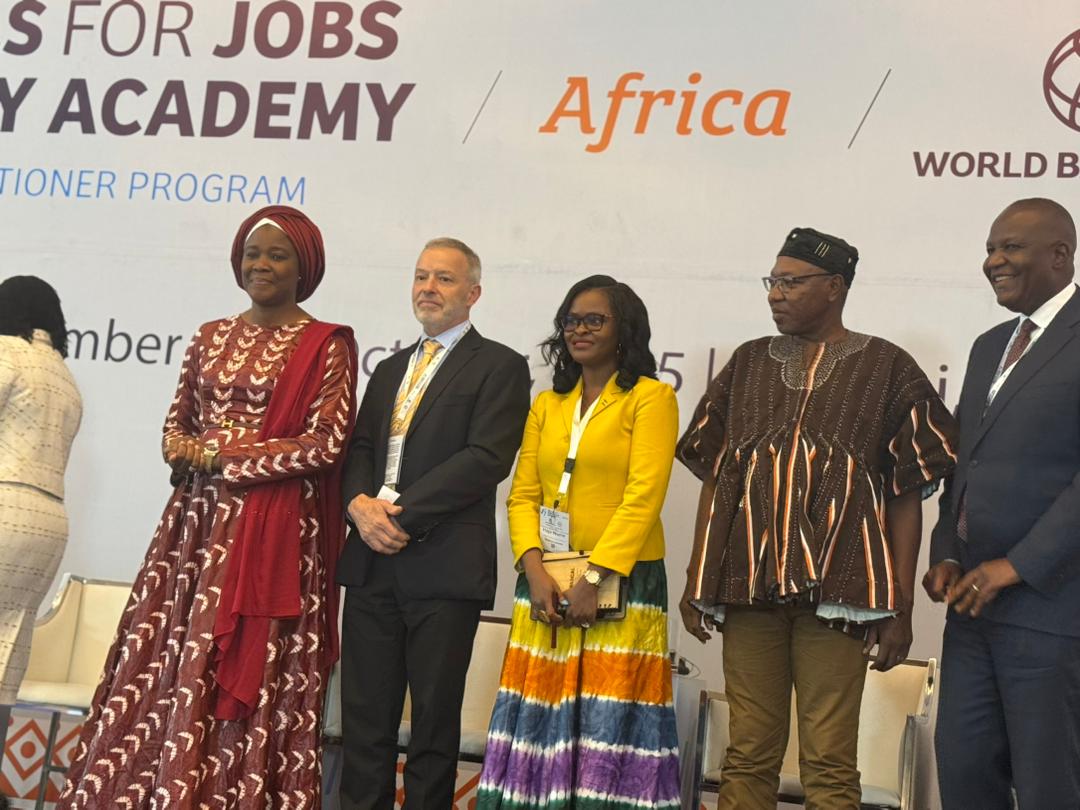

Ghana’s Deputy Minister for Education, Dr. Clement Abas Apaak, has underscored the central role of Technical and Vocational Education and Training (TVET) in the country’s ongoing educational reforms, describing it as a critical pillar for job creation and private sector growth.
Speaking on a high-level Ministerial Panel at the Africa Skills for Jobs Policy Academy in Nairobi on Tuesday, September 30, 2025, Dr. Apaak said Ghana’s recent economic recovery presents an opportunity to realign the education system with labour market needs through a deliberate focus on technical and vocational training.
“The Ghanaian cedi has become one of the strongest-performing currencies,” he said. “This gives us the fiscal space to be innovative — to empower private entities to function. But how are we going to do this without educational reforms? And the reforms must be in the area of technical and vocational education.”

The Africa Skills for Jobs Policy Academy, which runs from September 30 to October 3, 2025, brings together education ministers, policymakers, private sector stakeholders, and development partners to chart pathways for TVET transformation across Sub-Saharan Africa.
The event is organized by the World Bank, in partnership with the Government of Kenya and the Inter-University Council for East Africa.
Dr. Apaak highlighted Ghana’s efforts to reposition education as a tool for national development, pointing to the recently launched National Forum on Education, which aims to gather ideas from citizens on the future of Ghana’s education system.
“Our government initiated the National Forum on Education to solicit ideas from all walks of life about what we needed to do to reposition Ghanaian education — to make it more meaningful and to support our quest to thrive,” he noted.
Findings from the forum, he said, have reinforced the urgency of investing in TVET as the most viable route to tackle youth unemployment and bridge the skills gap.
“In fact, our Minister for Education has recently advocated for the government to consider allocating about two percent of our oil revenue to finance technical and vocational education,” Dr. Apaak revealed.

He cautioned that failure to prioritize skills-based training could limit Ghana’s global competitiveness, adding that a strong, skilled workforce is essential for innovation and sustainable development.
Dr. Apaak also challenged prevailing perceptions that TVET is a fallback for academically weak students, insisting that such mindsets must change if the country is to unlock its full human resource potential.
“There is this tendency to believe that it is students who are less competent academically who are to take up technical, vocational education and training,” he said. “But this is far from the truth. TVET is not second-class education — it is opportunity-based education that equips learners with skills they can use from day one.”
He concluded by reaffirming the commitment of the government to expand and upgrade TVET infrastructure and training programs.
“The Mahama administration had already set in motion plans to scale up TVET facilities to ensure learners can fully benefit. This work must continue and be strengthened,” Dr. Apaak said.
The Nairobi forum continues this week with sessions focusing on skills financing, private sector collaboration, and curriculum innovation to meet Africa’s growing employment demands.