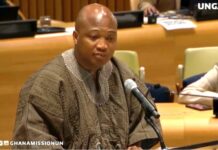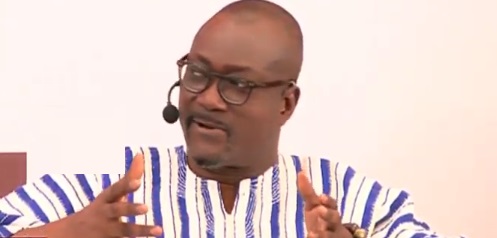

The Executive Director of the Ghana Centre for Democratic Development (CDD-Ghana), Professor Henry Kwasi Prempeh, has questioned the priorities of Ghana as a democratic polity.
The Professor says he can’t fathom why the nation has been bedeviled by debt over the years without having anything to show for it.
According to him, the state has been settling for mediocrity instead of taking strong decisions to make ambitious headway in the interest of the citizenry.
Referencing a Tuesday, September 9, 2025, publication by the Addis Insight, where the Ethiopian government has unveiled a US$30 billion infrastructure push, including a nuclear plant, the Chairman of the Constitutional Review Committee questioned why a country like Ghana, a democratic state, cannot boast of similar ambitious initiatives.
“Why has democratic Ghana produced debt upon debt without similar grand ambition or priorities? Why do we settle for mediocrity?” he said in a post on his Facebook on Thursday, September 11, 2025.
Ethiopia is preparing to launch six large-scale infrastructure projects worth an estimated $30 billion, Prime Minister Abiy Ahmed said in a national address, underscoring the government’s push to expand energy production, refine oil domestically, and address urban housing shortages.
The initiative includes a nuclear power plant, an oil refinery, a natural gas facility, an airport expansion program, and the construction of 1.5 million housing units over the next six years.
At a combined cost of $30 billion, the projects represent almost a quarter of Ethiopia’s GDP. The government has not disclosed how it plans to finance the program. Analysts expect a mix of external borrowing, public–private partnerships, and possible diaspora financing, modeled after bond sales used to support the GERD.
Ethiopia’s fiscal position remains strained. The country is in talks with the International Monetary Fund over a new program, and faces acute foreign exchange shortages and high debt servicing costs. Securing financing for multiple capital-intensive projects at once could prove difficult.
The announcement comes as Ethiopia seeks to stabilise its economy and reassert its regional influence after years of internal conflict. A nuclear power plant would be a first for the Horn of Africa and could elevate Ethiopia’s standing in global energy diplomacy, though it may also draw scrutiny from neighboring states and international partners.
For Abiy’s government, the projects serve a dual purpose: positioning Ethiopia for long-term economic growth while also signaling confidence in recovery despite current headwinds. Whether the plans materialize will depend heavily on financing, political consensus, and execution capacity.
Prof. H. Kwasi Prempeh calls for reforms and transparency in judicial removal process