
The Bono East Region, widely regarded as Ghana’s agricultural heartland, is grappling with a silent crisis.
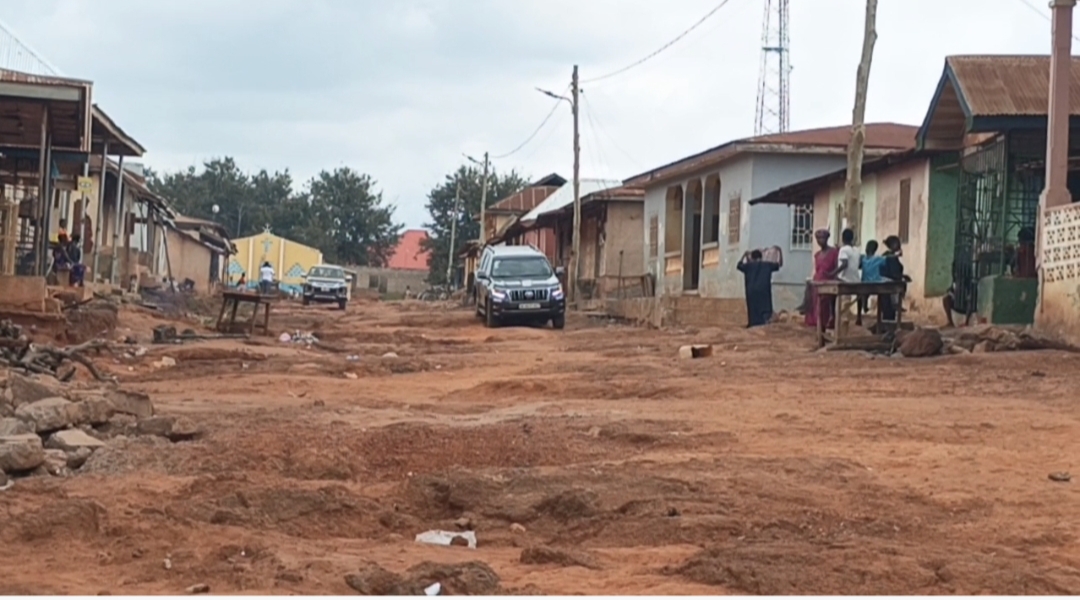
While government investments in major road projects are visible, the inner roads that serve as lifelines for farming communities remain in dire condition, undermining the region’s economy and worsening poverty.
Farming is the primary source of income for most residents in Bono East, yet deteriorating road infrastructure is crippling the sector. According to a 2023 Food and Agriculture Organization (FAO) report, about 14% of the world’s food is lost before reaching consumers, with losses in developing regions nearing 40%.
For farmers in Ofuman, Martesso, and Kranka, these figures are not just statistics but harsh realities they live with daily. Farmers face immense difficulties transporting produce to major markets in Techiman. Poor roads make trips longer and more expensive, often leading to vehicle breakdowns and high maintenance costs for drivers. As a result, many farmers are forced to sell produce at a loss—or worse, watch it rot on their farms.
“Sometimes, we harvest our crops and they just sit there, rotting because no driver is willing to come on these bad roads,” a farmer from Ofuman lamented.
The challenges extend beyond agriculture. During the rainy season, some roads become slippery and impassable, while in the dry season, thick clouds of dust from untarred roads pose serious health hazards. Residents report widespread respiratory illnesses linked to the poor road conditions.
“During the dry season, the dust is so thick you can’t even see the person walking in front of you,” a Kranka resident said. “My children are constantly sick with coughs and respiratory problems. It’s a serious health concern for everyone here.”
The poor infrastructure also discourages investors who see the logistical challenges of transporting goods and services, further stalling the region’s development.
Local leaders and residents acknowledge ongoing government efforts under the “Big Push” agenda, which has seen sod-cutting for new highways. However, they argue that the real priority should be on inner roads directly linked to the agricultural value chain.
“We appreciate the government’s efforts, but they are forgetting the very roads that feed our families and the country,” traditional leaders said.
The situation in Bono East underscores the urgency of meeting Sustainable Development Goal (SDG) 2, which seeks to end hunger, achieve food security, and promote sustainable agriculture. Without functional road networks, post-harvest losses will continue to drain millions of Ghana cedis from farming communities each year.
Improved inner roads would not only reduce these losses but also boost food supply, strengthen the economy, and improve livelihoods across the region.
Until deliberate steps are taken to address the road crisis, Bono East’s farmers who feed much of the nation will remain trapped in a cycle of poverty.