
The Electricity Company of Ghana recorded 44 electrical incidents in 2025.
The Manager for Safety at Head Office of ECG, Pearl Essel who disclosed this at safety meeting in Kumasi, on Friday, January 16,2026, said the incidents comprises 16 staff related incidents and 28 involving non-staff.
In response to recurring safety incidents, near misses, and fatalities, the Ashanti Inter-Regional Safety Team of ECG—comprising the four operational regions—has called for a renewed and uncompromising commitment to safety from all stakeholders. The collective goal is clear and ambitious: zero safety incidents in the first quarter of 2026.
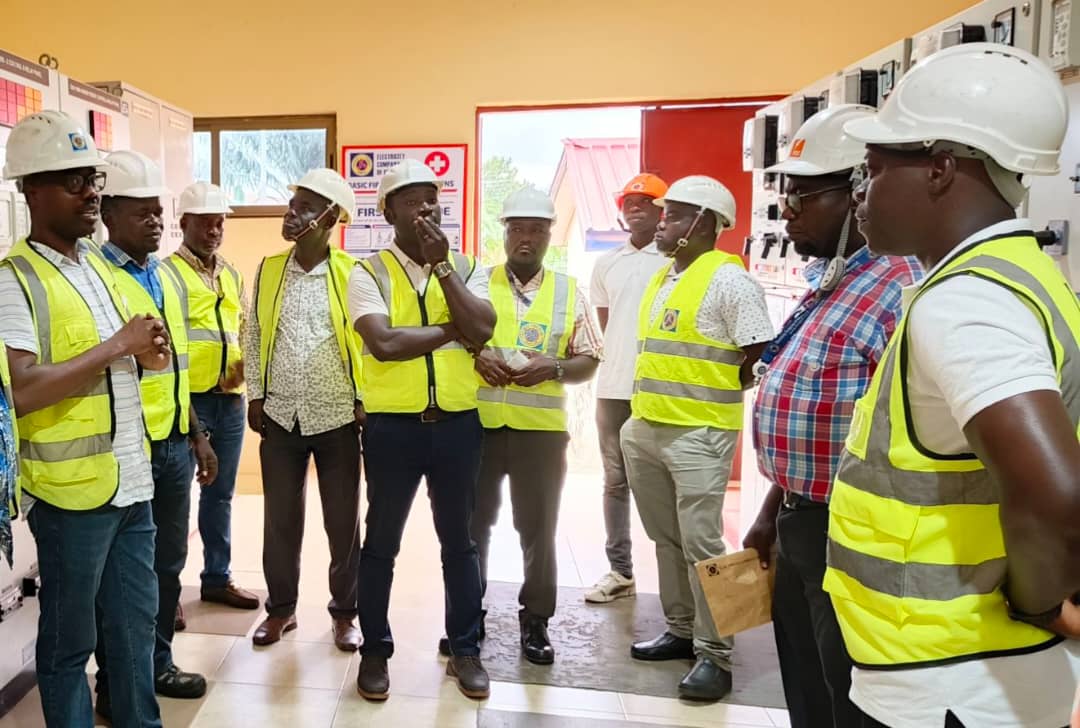
This renewed resolve emerged at the First Quarter 2026 Ashanti Inter-Regional Safety Meeting, held at ECG’s Boadi Office. The meeting brought together all Regional Engineers (REs), their respective Regional Safety, Health and Environment (SHE) Representatives the Sub-Transmission General Manager, and the Technical Managers, underscoring the Regions’ collective resolve to place safety at the centre of all operations.

Providing a sobering overview of ECG’s safety performance, Ing. Pearl Essel, Manager for Safety at Head Office, joined the meeting virtually to present national incident statistics.
More troubling, she noted, was the loss of lives nationwide. Twenty fatalities were recorded, including one staff fatality and nineteen non-staff fatalities, resulting in compensation payments amounting to GH₵1,269,765.
Touching on the Ashanti operational area, Ing. Essel reported that the combined Ashanti regions recorded four non-staff fatalities, with zero staff fatalities. Specifically, two fatalities occurred in Ashanti East, one in Ashanti Sub-Transmission, and one in Ashanti West. These incidents involved contractor personnel and members of the general public.

Against this backdrop, and following detailed regional safety presentations, the identification of recurring gaps, and analysis of incident trends, participants unanimously resolved to significantly tighten safety compliance and enforcement across all levels. The commitment extends to ECG staff, third-party contractors, and members of the general public who interact with the company’s infrastructure.
Key resolutions reached include intensified training and strict enforcement of safety rules, the deployment of Regional Safety Officers to districts to directly educate staff, and enhanced safety training and supervision for contractors. To strengthen operational control, the meeting also agreed that all isolation requests must pass through Regional Engineers, while all permits to work must be issued through the designated Controller.
The Ashanti Inter-Regional Safety Team has therefore set a decisive tone: no task is so urgent, and no assignment so important, that it cannot be done safely. Participants agreed that safety must move beyond compliance to become a shared culture—one driven by vigilance, accountability, and genuine care for human life.
By Benjamin Aidoo