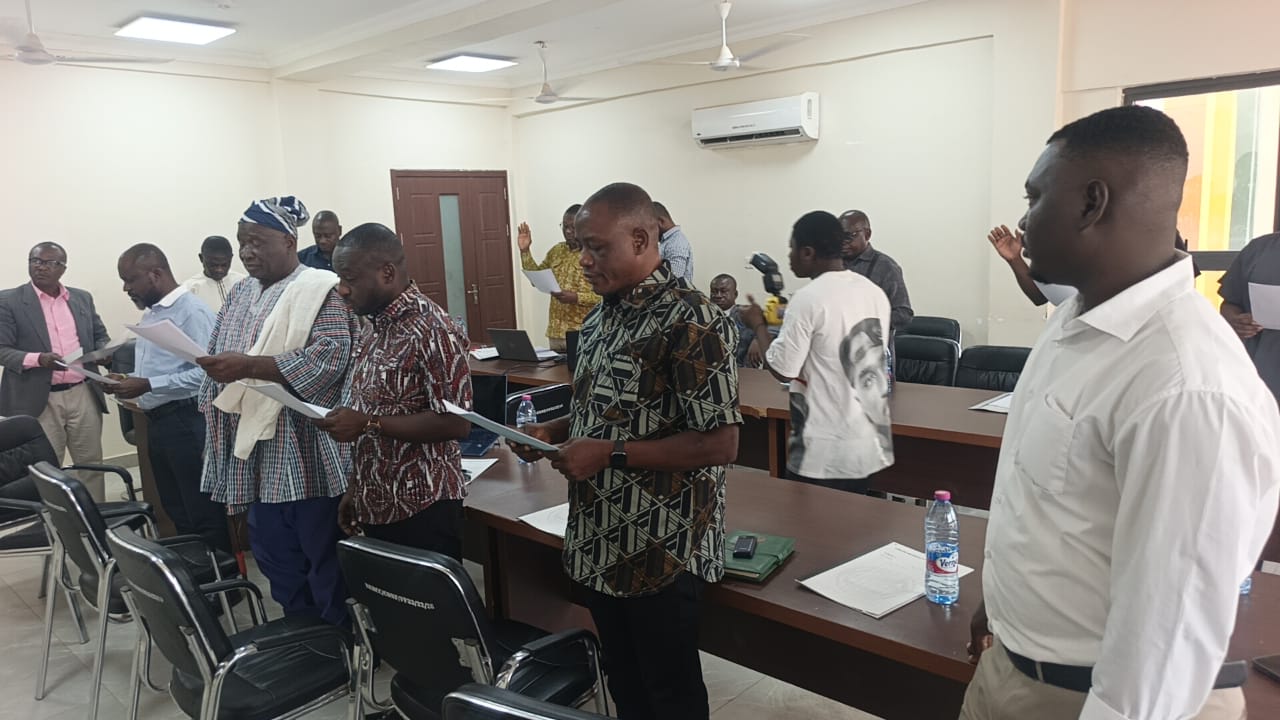

The North East Regional Coordinating Council has inaugurated its Regional Spatial Planning Committee, signaling a commitment to strategic and coordinated development that aims to improve quality of life, protect the environment and stimulate economic growth.
The inauguration of the Regional Spatial Planning Committee, driven by the Regional Minister, Ibrahim Tia, highlights a dedication to integrated, sustainable and inclusive advancement.
At its core, spatial planning involves the strategic use of land to better the lives of residents, protect our environment and foster economic prosperity. The Land Use and Spatial Planning Act, 2016 (Act 925), mandates the establishment of these committees to ensure cohesive planning from the ground up.
The Regional Spatial Planning Committee is tasked with several key responsibilities including;
1. Harmonizing spatial development frameworks across districts.
2. Advising on land use and infrastructure projects in alignment with regional and national priorities.
3. Integrating spatial planning with environmental management, disaster risk reduction and sustainable livelihoods.
4. Promoting collaboration across sectors such as agriculture, housing and transportation.
5. Monitoring spatial development trends to inform policy and investments.

The North East Region, while rich in agricultural lands and cultural heritage, faces significant developmental challenges. Uncoordinated development, rapid urbanization, environmental degradation, and data inadequacies are compounded by a lack of overall development and a poor road network, hindering connectivity and economic activities.
Additionally, parts of the region have experienced chieftaincy, tribal, and land disputes, further destabilizing communities and impeding progress. The newly inaugurated committee aims to transform these challenges into opportunities through innovation, community participation, and strategic planning, fostering a more stable and prosperous environment.

In his address, Minister Ibrahim Tia emphasized the importance of this committee, stating, “This Committee is not just an administrative formality. It is a strategic instrument to shape the future of the North East Region. We are called upon to think long-term, act decisively, and plan for generations not just election cycles.”
He also noted that effective spatial planning requires the active involvement of all stakeholders, including traditional authorities, district assemblies, civil society organizations, and the private sector. He called upon committee members to approach their duties with dedication and professionalism, ensuring that regional strategies align with district development plans.
According to the regional minister the government, through the Ministry of Local Government and the Land Use and Spatial Planning Authority (LUSPA), is committed to ensuring functional and integrated regional planning systems.
By Solomon Kwame Kanaluwe