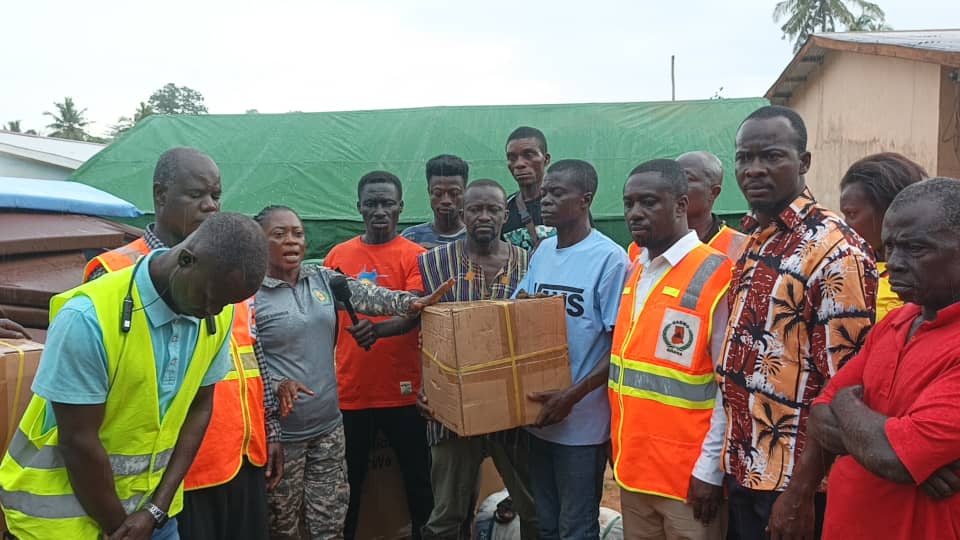

The National Disaster Management Organisation (NADMO) has presented an ultramodern air-conditioned camp tent and mattresses to residents of Aboi-Nsuoakyi in the Aowin Municipality of the Western North Region who were displaced by recent flooding.
The relief items are intended to provide temporary shelter and improve living conditions for affected families whose homes and belongings were destroyed during the floods that struck the municipality about three weeks ago.
The floods, triggered by days of torrential rainfall, affected several communities in the Aowin Municipality, displacing hundreds of residents and destroying homes, farms and other properties.
Presenting the items to the community, NADMO officials said the intervention forms part of the organisation’s commitment to supporting victims of natural disasters and helping them recover from the impact of the floods.
Receiving the items on behalf of the beneficiaries, the Municipal Chief Executive for Aowin expressed appreciation to NADMO for the timely intervention.
“We are grateful to NADMO for this support. These facilities will provide temporary relief to the affected families. I urge all beneficiaries to take good care of the camp tent and mattresses so they can continue to serve those who need them most,” he said.
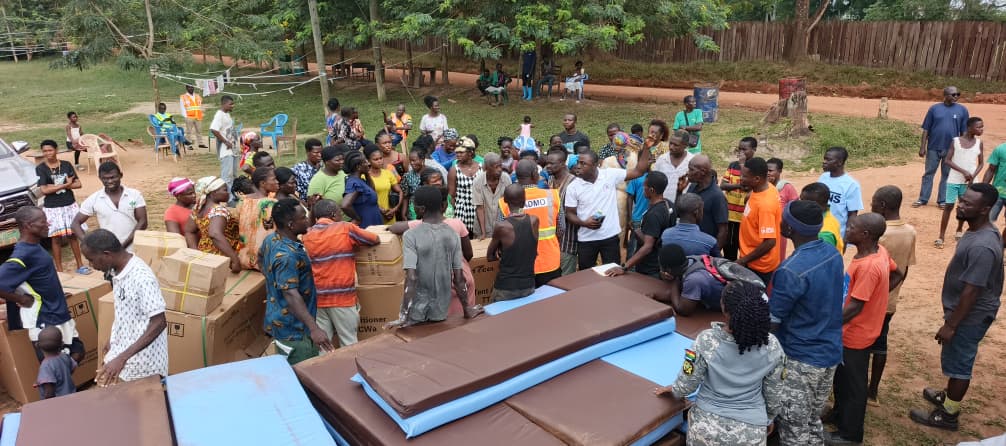
Beneficiaries also welcomed the intervention, describing it as a source of hope after weeks of hardship.
“We thank NADMO and the government for remembering us. Since the floods, many of us have struggled to find a safe place to sleep. This support has brought us hope, but we still need food, clothing, cooking utensils and building materials to help us rebuild our lives,” one beneficiary said.
The Aowin Municipality was among the hardest-hit areas following the recent floods in the Western North Region. The disaster claimed lives, displaced thousands of residents and caused extensive damage to homes, farms and public infrastructure.
Authorities have appealed to humanitarian organisations, corporate institutions and the general public to continue supporting affected communities as recovery efforts continue.
By Mathew Ahiaveh