
Young innovators are being challenged to redefine the future of Ghana’s cocoa industry through technology, entrepreneurship and research as stakeholders call for greater investment in youth-led solutions to strengthen one of the country’s most important economic sectors.
The call was made at the Ghana Cocoa Innovations Hackathon 2026, held at the Kwame Nkrumah University of Science and Technology (KNUST), where students presented innovative ideas aimed at improving productivity, sustainability and value addition across Ghana’s cocoa value chain.
For decades, cocoa has remained a cornerstone of Ghana’s economy, contributing significantly to export earnings and supporting the livelihoods of millions of farmers. However, changing climate conditions, declining youth participation in agriculture and evolving global market demands continue to threaten the long-term sustainability of the sector.
Against this backdrop, the Ghana Cocoa Innovations Hackathon 2026 provided a platform for students, researchers, industry experts and development partners to collaborate on practical solutions capable of transforming the country’s cocoa industry.
Held under the theme, “Bridging the Gap Between Industry and Academia Through Youth-Led Innovations and Entrepreneurship in Cocoa,” the event encouraged young innovators to develop business-oriented solutions that respond to challenges across the cocoa value chain while creating employment opportunities.
Keynote Speaker and Diplomat at the Netherlands Embassy in Accra, Naomi Tuinstra, underscored the importance of innovation and collaboration in securing the future of Ghana’s cocoa industry.
“We intended this program to entice young people to think about the cocoa sector in an innovative way. We also want to bring in the narrative of positivity and potential. This will also bring together Dutch businesses, Ghanaian businesses and universities to collaborate where young people can work together more with private sectors,“ she said.
She encouraged young people to embrace entrepreneurship and leverage research to develop sustainable solutions that will improve the competitiveness of Ghana’s cocoa sector.
Lead Organiser, Dr. Eli A. Gaveh, said the hackathon extends beyond a competition, describing it as a platform designed to equip young people with coaching, mentorship and entrepreneurial skills needed to transform innovative ideas into viable businesses within the cocoa industry.
“We will make sure there is direct linkage between the ones who proposed the innovation and the industry. We will also make sure that the industry absorb those who made the innovations for opportunities like coaching and mentorship as well as lead them in entrepreneurship drive,” he said.
Throughout the competition, participating teams pitched solutions addressing critical issues, including increasing cocoa productivity, promoting environmentally sustainable farming practices and creating value-added cocoa products capable of competing in international markets.
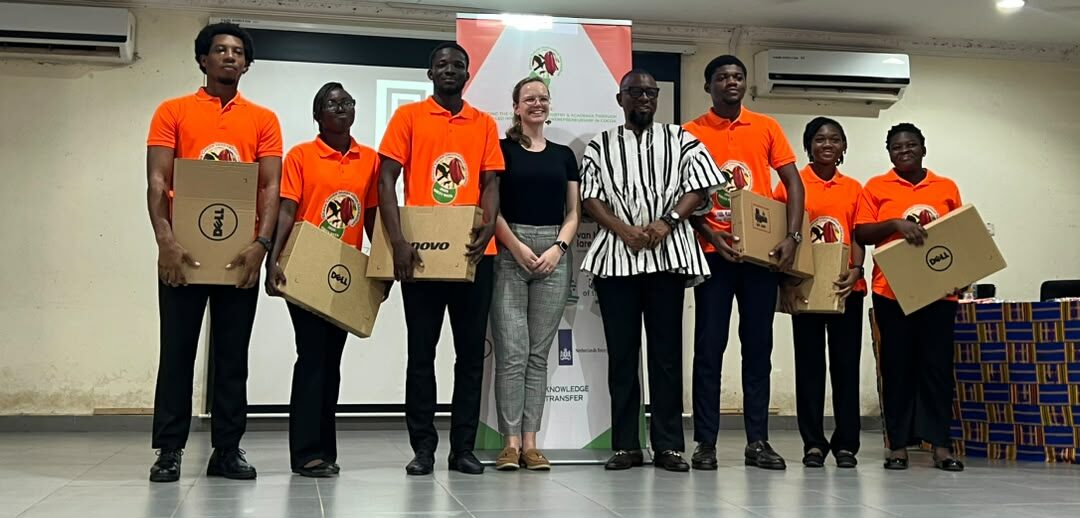
The most outstanding innovation was recognised and rewarded with laptops in acknowledgement of the team’s creativity, practicality and potential impact on the industry.
The University Relations Officer of KNUST, Dr. Norris Bekoe, commended the initiative, saying programmes that connect academia with industry play a crucial role in nurturing entrepreneurial graduates and addressing youth unemployment through innovation.
“There is a lot within the students. All we need to do it to create the needed platform to do so. We don’t want our children to be at home after graduating. We want to make sure there’s creativity and innovation mindset within the students”
Organisers are calling on government to deepen support for youth-led agricultural innovation by establishing land banks, expanding investment in irrigated agriculture and improving access to modern farming equipment.
They believe empowering young innovators with the necessary resources will not only secure the future of Ghana’s cocoa industry but also create sustainable employment opportunities and strengthen the country’s agricultural economy.
By Agbozo Darrell Worlanyo