
The conversation around renewable energy is shifting from simply providing access to electricity to finding ways of turning that energy into economic opportunities.
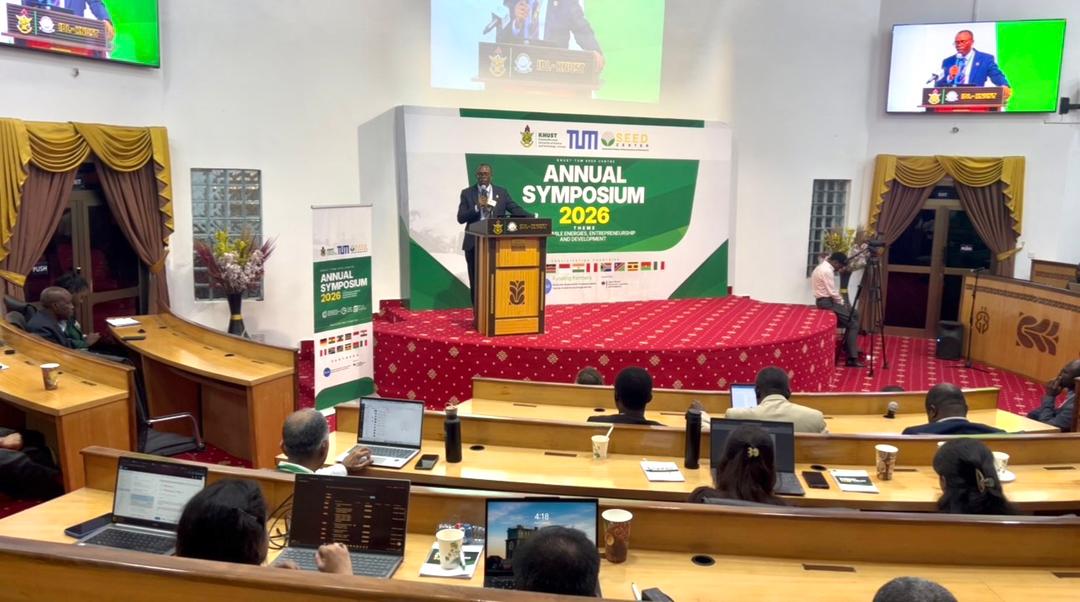
At the Annual Symposium 2026 at KNUST, held under the theme, “Sustainable Energies, Entrepreneurship and Development”, researchers and industry stakeholders examined how sustainable energy can be harnessed to support entrepreneurship and respond to some of the everyday challenges facing communities.
Prof. Francis Kemausuor, Dean of the Faculty of Mechanical and Chemical Engineering at KNUST, says research being undertaken by the University is already demonstrating what is possible when energy is connected to productive activities.
“Some of our members have been conducting research in these areas and we are here to discuss these research projects we have been conducting and look at how we can push the agenda forward with regards to using energy for productive services.
Using energy for activities that can provide income for people. So, for example, we have a solar mini grid system set up in a village called Yeboahkrom which is helping the people use their freezers to provide cold drinks, fish and meat to the community.
We have just finished installing a water system for them. The community didn’t have access to clean water but because of the solar mini grid we have, we have provided a pumping system that pumps water into an overhead storage tank and will provide drinking water to the people in the community. “
For researchers, such projects demonstrate how renewable energy can become a driver of local enterprise and income generation. But the potential applications extend beyond rural communities,” he said.
According to Prof. Kemausuor, solar energy is already being used to power traffic lights at selected locations around the KNUST campus.
Researchers believe similar systems could help address traffic disruptions caused by power outages at busy intersections.
Engineer Seth Mahu says he intends to engage the Minister for Energy and Green Transition on the research and explore discussions with the KNUST team on a possible pilot project.
“We are working with academic institutions like KNUST who have done some cutting edge research in the deployment of renewable energy to address traffic issues in the country and implement some of the findings they have made because academic industry must have some bearings on industry and one way to demonstrate that is to make sure that the discovery they’ve made in the use of solar energy to address traffic issues is brought to bear in partner with the Ministry of Energy, the Ministry of Roads and all the various stakeholders to implement some of these discoveries to enable us tackle these perculia issues,” he said.
The symposium has therefore placed emphasis on developing renewable energy solutions.
From supporting economic activities in communities to powering critical public infrastructure, the experts say the potential of renewable energy lies in how effectively Ghana can invest in and deploy the technologies already available.
By Agbozo Darrell Worlanyo