
President John Dramani Mahama’s second coming is anchored on a reset agenda. Twenty one months down the path of reset, one name has consistently stood tall in the public sphere conversations about the government’s performance.
That name belongs to the Minister for Roads and Highways and Member of Parliament for Adaklu — Governs Kwame Agbodza.
Nicknamed “Adaklu Messiah,” Agbodza was appointed at a time when public confidence in road delivery had dimmed, despite some very loud slogans on road construction.
The demand across the country was high. Commuters on the Pokuase-Nsawam stretch or those around Suame in the Ashanti Region or those on the Cape Coast – Kasoa road for example, lived a daily nightmare of stalled projects. Today, those projects are almost completed and will pass as some of the best road infrastructure in Ghana’s history.
The Minister came with a clear mandate: to execute President Mahama’s Big Push agenda; of a trans-generational investment in quality, durable road infrastructure that connects economic zones, reduces travel time, restores faith in public works, and fixes Ghana’s road network once and for all. He is also mandated to deal with other road matters.
The scope of that mandate includes turning the whole country into a construction site, while maintaining high standards. So, as an architect, Agbodza designed an operational pyramid and placed strict discipline, jealous dedication and selfless duty to God and country at the pinnacle.
He knew from the get go that propaganda had no place in the scheme of things. The road is either done, being done or not done. In Ghana, physical infrastructure like roads, schools and hospitals are part of the ultimate proof of government performance. So Kwame says “you can’t do propaganda with a road. If it is being constructed, you will see it.”
Without delay, he also instituted a non-negotiable key performance indicator for every road contractor. The rule book dictates that they are to either perform and deliver on time, or make way for someone else to do the job.
The Author
He anchored this performance and delivery agenda on three pillars.
The first, was to clear arrears and remobilize funds. Contractors who had abandoned their sites for lack of funds and unpaid certificates were brought back into the fold. No contractor was sacked on party lines and no project was halted for a-never-ending-audit as was done in the past with cocoa roads. Approved certificates are paid on time to permit work flow. Additionally, inherited projects are being continued as President Mahama instructed, with completion, not “you do me, I do you” politics in mind.
Secondly, he set out on a zero tolerance for ‘eye-service’ from pleasing-men. Agbodza’s modus operandi has made unannounced site visits a standard practice today. This is to end the culture where contractors only work when they hear the minister is coming to their site. On a few occasions, he has openly lambasted members of his own team for tipping off non-performing contractors. Some of those contractors have been exposed badly on camera.
Thirdly, he is determined to deliver legacy projects such as the Accra-Kumasi Expressway, outer ring roads and bypasses, the Eastern and Western Corridor roads and other strategic roads. Today, more than 2,000 kilometres of roads across all the sixteen regions are under active construction or rehabilitation under his watch.
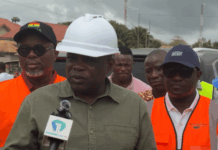
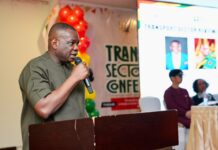
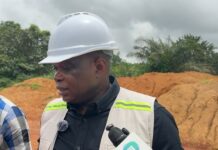
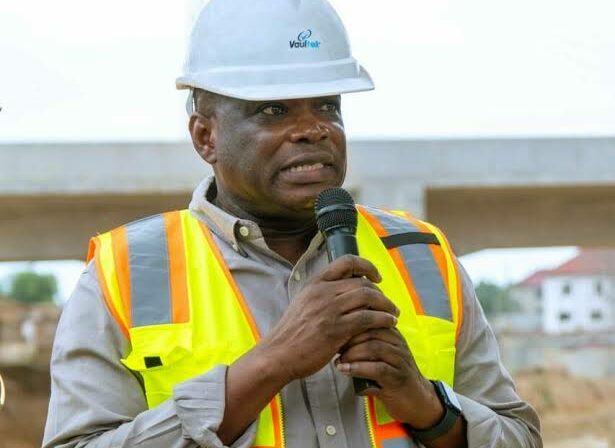
Kwame Agbodza is like a Field Marshal with a compass at the war front. His workaholic self in a pair of rugged boots, coupled with his energy levels, technical know-how and work ethics are admirable to say the least.
What sets him apart is style. He is rarely in the air conditioned office at the Ministry, because he believes his actual office is on the field where real work takes place.
He is an early bird who shows up before sunrise. He hits the road to write the reports himself, so that he can see through heaps of flowery paragraphs that say next to nothing about the facts on the ground.
Testimonials from staff of the Ministry of Roads and Highways, contractors, engineers, consultants and visitors to the Ministry suggest he has brought a new lease of energy and work ethic to a ministry that touches every Ghanaian.
I asked a ministry staff what he thinks about the Minister sometimes hitting the road at dawn. He answered and said “if the minister is on the road at 5:00 a.m, who dares to be late? The boss is running, why shouldn’t I, my brother?”
Agbodza is not only described as a field minister who inspects projects unannounced. He also demands that consultants and contractors mount tents on-site to review designs in a single meeting to solve a problem, instead of waiting for weeks for answers.
Social media is awash with his brutally frank inspections and the results they bring. The Gen Z community have also been following. In fact, even on his birthday, he was out in the sweet heat and rain inspecting projects.
There have also been occasions where he has ordered projects to be descoped so that other contractors can be brought in to finish on schedule.
On the Kumasi Outer Ring Road, he tasked Arab Contractors to move beyond earthworks and start concrete works concurrently in accessible zones. At Suame, where only about five percent of the interchange had been completed, he ordered a crash programme, declaring that “2028 is too far.”
On the Accra-Kumasi bypass, particularly the congested Konongo section, he pushed contractors like Kofi Job to remobilize ahead of schedule, with a target to make it usable before Christmas and fully complete by the end of 2027.
Kwame Agbodza has directed that contractors must never halt work for dignitaries because, they are not different from members of the public. He has also warned utility agencies like the Ghana Water Company, Electricity Company of Ghana and the telcos that any unauthorized digging of newly completed roads will not be countenance and will attract legal action.
Everyday seems like an opportunity to re-echo his message to errant contractors to adhere to timelines or risk termination. To his regional directors, he has warned against filing glowing reports while contractors have abandoned sites. Where directives are flouted, he summons parties to his office as early as 7:00 a.m. to explain why their contracts should not be terminated or why punitive action should not be taken.
This has ensured that from Accra right up to Nalerigu, through the dusty stretches in the countryside to the choked urban roads in Accra, Kumasi, Tamale, Wa, Bolgatanga, Sekondi-Takoradi, Ho, Koforidua, Sunyani, Cape Coast, Techiman, Goaso, Sefwi Wiawso, Dambai, Damongo and Nalerigu, Ghanaians are beginning to feel it, even though it has just started.
They can see their roads getting attention from serious contractors under the supervision of a minister and a team that mean business.
That’s not all, it appears Agbodza also has ten commandments for contractors. From where I sit, the Minister lives by those ten commandments, which he enforces during inspections. They are;
1. Thou shall not stop work, except when continuing poses danger to the public.
2. Thou shall complete existing projects first before asking for new ones.
3. Thou shall not abandon the road. Keep faith with the state because the road is the lifeline to many communities.
4. Thou shall deploy full capacity of machinery and manpower to site to accelerate work.
5. Thou shall water unpaved roads regularly to control dust and protect residents and road users.
6. Thou shall deliver quality, not shoddy work.
7. Thou shall tick every box in the contract.
8. Thou shall not accept contracts and abandon site to parade the corridors of power for cover.
9. Thou shall meet timelines or lose out on next phase of Big Push contracts.
10. Thou shall show your scorecard to be prioritized for payment.
Another striking thing about the Agbodza-factor is the opportunity given to numerous young Ghanaian professionals to work alongside local and international contractors. This integration will afford them hands-on opportunities, invaluable practical experience for long-term national capacity building within Ghana’s engineering sector. That is a major step for Ghana beyond aid.
The public review and scrutiny have been largely positive, but not without debate.
On the floor of Parliament, Minority Leader Alexander Afenyo-Markin commended Agbodza. On that occasion he said: “you have done well with the field visit. I watched you and you did it with passion.”
Various editorials and social media streams note Agbodza’s phenomenal, bold, fearless and proactive leadership as redefining the role of a minister. Many have suggested he could finish his tenure as the best and most effective Roads Minister Ghana has ever had.
It has been said in certain quarters that other ministers and government appointees ought to emulate his example to put the reset agenda on top speed.
On the flip side, he has been accused of being “busy for nothing” without tangible impact for commuters. Other critics also insist that he is not a road contractor and so he must leave the work for his technocrats to do. The Minority in Parliament have also accused him of misrepresenting road kilometres built by the previous administration.
That cocktail of praise and criticism is perhaps the strongest sign that the sector is alive again. Ghanaians are watching the roads and giving feedback.
From the look of things, the Minister understands that good roads save travel time, reduce transport fares, enhance safety, connect businesses to communities, generate revenue for government, improve emergency response time, and create jobs during and after construction.
Cheers to you, Kwame Agbodza. Your hands-on, results-demanding, no-nonsense approach for every kilometer, is making a difference for Ghana and for the government you serve. Be proud of yourself, you are a King in your own right!
By Johnnie Hughes