
Award-winning Ghanaian-British architect Sir David Adjaye has mounted a defence of Ghana’s controversial National Cathedral project, describing it as not merely a place of worship but as a strategic national asset capable of driving tourism, economic growth, cultural education, and urban renewal.
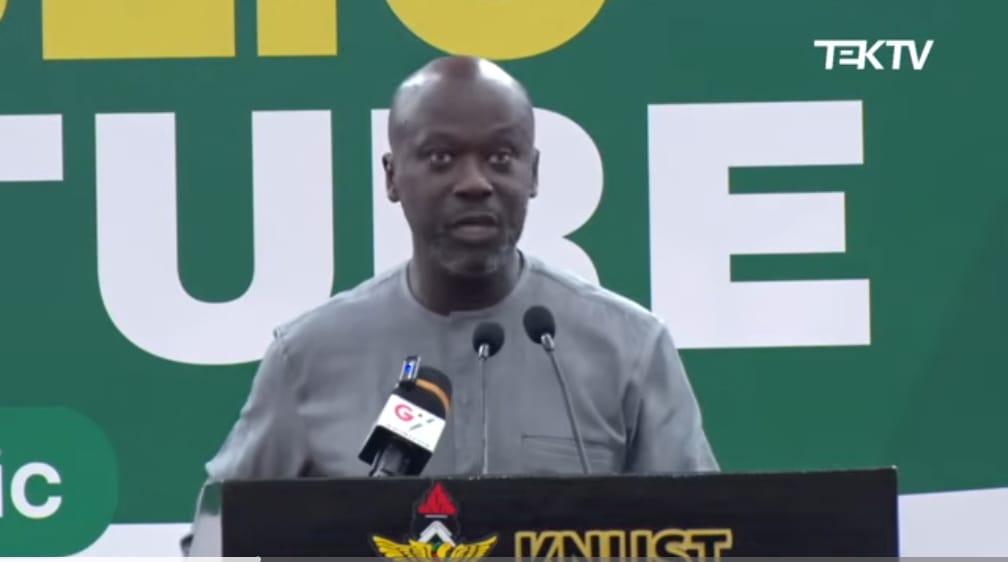
Speaking at a public lecture hosted by the College of Art and Built Environment at the Kwame Nkrumah University of Science and Technology (KNUST) on the theme “African Futures: Architecture, Identity and the Power of Cultural Narratives,” Adjaye directly addressed the project that has dominated public debate in Ghana for years.
“I want to talk about a project which is very controversial in our country because I can’t let the elephant be in the room. There’s no point. And I know that this project has caused a lot of heartache with lots of people.”
The architect said many Ghanaians have not had the opportunity to hear the thinking behind the design from the architects themselves.
He argued that one of the strongest justifications for the National Cathedral lies in its potential to attract religious tourism, which he described as one of the world’s most reliable tourism sectors.
“One of the most enduring and most productive injections of GDP into a country is religious tourism. In case you did not know, what do you think the Vatican is?”
According to him, research conducted during the project’s development convinced the team that Ghana could benefit significantly from becoming a destination for faith-based tourism.
He maintained that such visitors often contribute positively to local economies and communities.
“If you’re going to create engines of economic uplift, this is a great model more than concerts for music.”
A key point in Adjaye’s presentation was that the project was never intended to function solely as a cathedral.
“You can’t just make a cathedral. You have to make something that contributes to Accra, that contributes to the community and uplifts and adds something more.”
He explained that the proposed complex includes a conference centre, music school, library, Bible museum, educational facilities, wedding chapels, and public gathering spaces.
Adjaye said the intention was to create a destination that serves multiple purposes while generating revenue and public engagement.
The architect revealed that his team successfully lobbied for the project site to be expanded to include extensive public gardens and parkland.
“Since independence, there has not been one designed biophilic park garden in the capital city. Biophilic design, nature spaces, when we densify Accra… becomes a critical requirement for the comfort and the humanity of people. We don’t live in concrete. We live with nature.”
According to Adjaye, the development would help create a continuous green corridor through the heart of the capital.
Addressing the cathedral’s distinctive appearance, Adjaye said the design draws heavily from Ghanaian cultural traditions rather than foreign religious architecture.
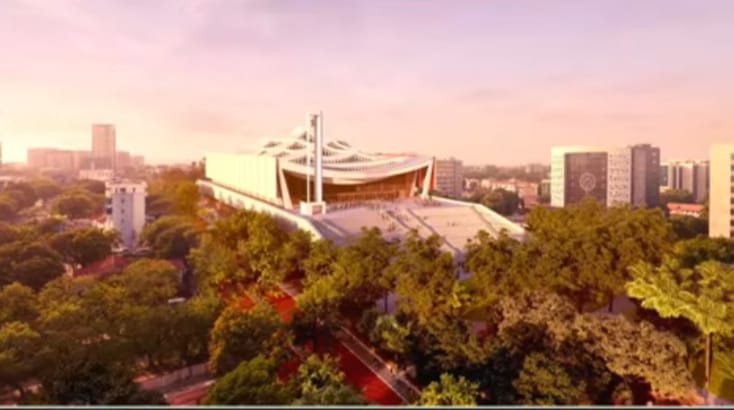
“The reverence that we give to our kingship is the same reverence we give to God. Let’s use science and engineering and this to create a form that would be uniquely from our culture.”
The cathedral was designed to accommodate approximately 5,000 worshippers inside while creating outdoor spaces capable of hosting up to 25,000 people for national and cultural events.
Adjaye described the project as a national landmark that would help define Accra’s skyline and identity.
He further claimed that the structure would become one of the city’s most recognizable landmarks.
The architect also highlighted the engineering innovations behind the design, particularly the proposed use of locally sourced engineered rammed earth.
He argued that the project would showcase Ghanaian innovation while reducing dependence on imported building materials.
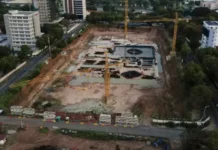
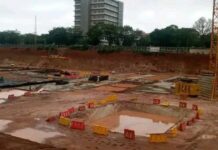
The National Cathedral remains one of Ghana’s most polarising public projects, attracting criticism over costs, funding arrangements, and government priorities during a period of economic hardship.

Yet Adjaye’s lecture offered perhaps his most comprehensive public defence of the project to date, portraying it as a transformative civic, cultural, educational, environmental, and economic investment.
Whether Ghanaians accept that vision remains a matter of intense public debate, but the architect made it clear that, in his view, the National Cathedral was always intended to be far more than a church.
“It’s not just a religious space. It’s a civic icon. It’s an educational space. It’s a sustainable space. And it’s a monument to Ghanaian culture and engineering.”
National Cathedral site now the world’s most expensive swimming pool – Ato Forson