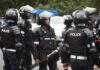

The Member of Parliament for Ofoase-Ayirebi, Kojo Oppong Nkrumah, has criticized both past and present leaders of the country for not putting in place humane procedures for recruitment into the security agencies.
He also cited the military high command for not being innovative about the recruitment processes.
Speaking on Accra-based Joy FM on November 13, 2025, Oppong Nkrumah said the stampede that occurred at El-Wak stadium which resulted in the death of six persons should serve as a wake-up call for national reflection and reform.
“Those of us in leadership, past and present, should bow our heads in shame because this is a blot on our conscience. I think the military should also bow their heads in shame,” he stated.
The lawmaker lamented the tendency to politicize such tragedies, emphasizing the need for structural reform rather than token gestures.
“There should be a moment of reform. Sometimes when these things happen, we just use them for partisan commentary. Then there’s a state funeral, some money is donated to the families, and we move on,” he added.
Oppong Nkrumah also extended his condolences to the families of the victims who lost their lives in the stampede during the recruitment exercise.
Background
A military recruitment exercise turned tragic on Wednesday morning after a stampede at the El Wak Sports Stadium in Accra claimed the lives of six applicants and left several others injured.
Family members of the victims are yet to be officially informed as authorities work to confirm the identities of the deceased. The Ghana Armed Forces has since suspended the ongoing nationwide recruitment exercise to allow for investigations into the incident.
What began as a hopeful opportunity for thousands of young Ghanaians aspiring to serve their country in the military quickly turned into a nightmare.
As early as 6 a.m., soldiers on duty struggled to control the overwhelming crowd that had thronged the El Wak Sports Stadium. Over two thousand applicants reportedly formed long queues stretching from the 37 Military Hospital bus stop to the stadium gates, resulting in massive traffic congestion in the area.

Eyewitnesses say the crowd kept swelling by the minute as more applicants arrived. When the gates were eventually opened for screening to begin, chaos erupted as eager candidates rushed in, leading to a stampede.
At least six people were confirmed dead at the scene, while several others sustained varying degrees of injury and were rushed to the 37 Military Hospital for treatment.
Authorities later announced that applicants who were unable to take part in the screening should return on Thursday, November 13, 14, and 15, depending on their recruitment category.

However, some applicants who spoke to TV3 expressed frustration and fear, insisting they did not trust the system and were unwilling to leave the stadium.
“We don’t trust the process. If we go home, we might miss our chance,” one applicant said.
Military personnel on duty reportedly used what they described as “minimum force” to disperse the crowd but struggled to restore order as more people kept arriving at the venue.
Later in the day, President John Mahama, accompanied by ministers of state and members of the military high command including the Chief of Defence Staff (CDS) and service chiefs visited the 37 Military Hospital to console victims and their families.

Briefing the media, the Commander of the 37 Military Hospital, Brigadier General Evelyn Abraham-Kwabiah, dismissed circulating reports that 12 people had died.
“We can confirm that six people lost their lives, not twelve as being reported,” she clarified.
The Ghana Armed Forces have temporarily halted the recruitment process while investigations continue into what caused the deadly stampede.

Despite the suspension, hundreds of hopeful applicants are still camping around the El Wak Sports Stadium, anxious not to miss any updates about the next round of screening.
The tragedy has sparked renewed debate about crowd control and safety during public recruitment exercises in Ghana, with many calling for better planning and coordination to prevent future occurrences.
The Ghana Armed Forces recruitment exercise is one of the most competitive in the country, attracting tens of thousands of applicants each year. Many young people see it as a gateway to stable employment and national service, but logistical and communication challenges often lead to confusion and overcrowding during the screening stages.
Authorities have promised to review safety protocols before resuming the exercise.