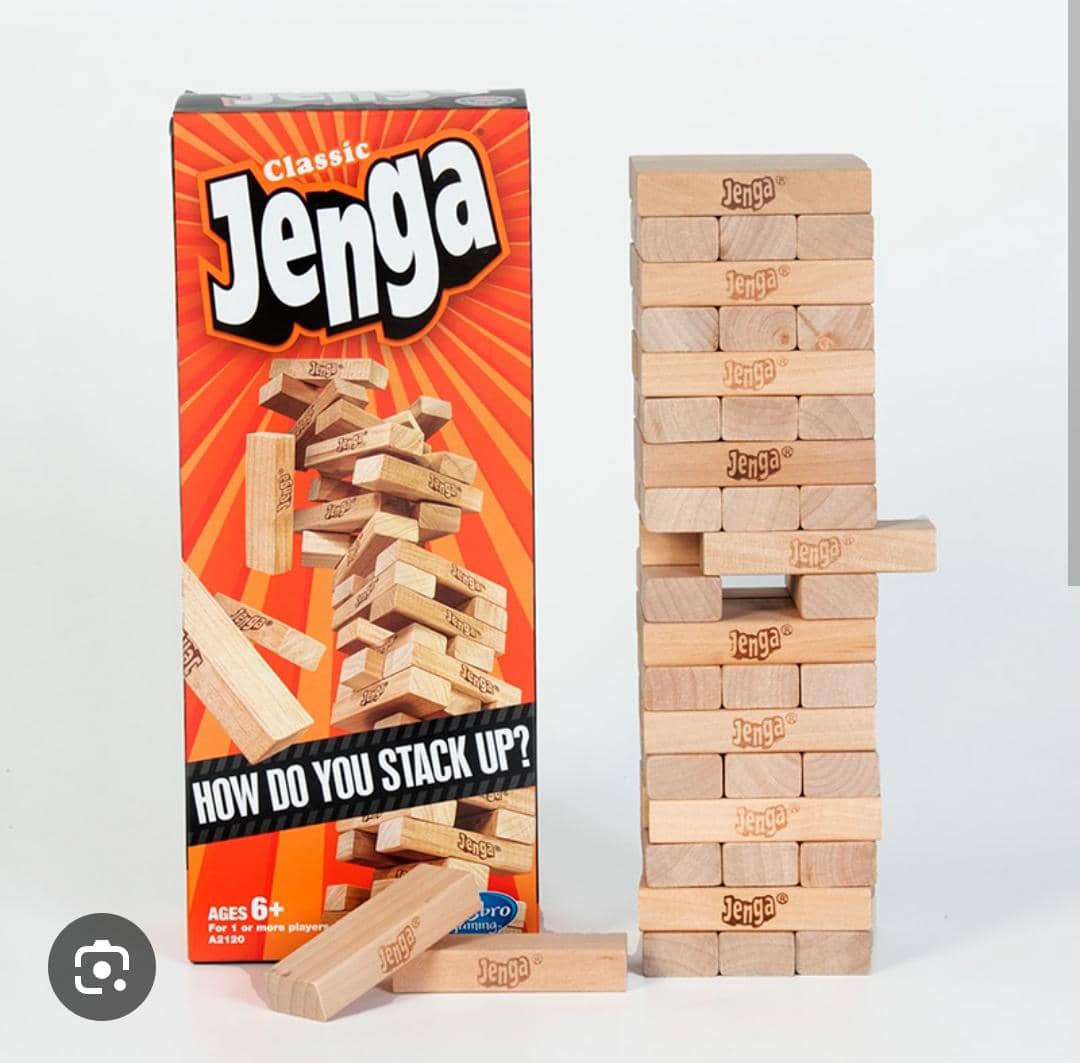

One wrong move, and everything comes crashing down.
It’s a game played in homes, bars, schools, and tournaments across the globe; by over 90 million people.
But what if we told you, this world-famous game has a story that begins right here in Ghana?
This simple wooden game known globally as Jenga is more than just fun and suspense.
Its roots trace back to Amanful in Takoradi, where a British woman, growing up in Ghana in the 1970s, played a humble block-stacking game using locally made wooden blocks.
That woman was Leslie Scott; and decades later, that childhood hobby would become one of the most successful games in history.
Scott brought the game to the UK, formalized the rules, and introduced it at the 1983 London Toy Fair.
And in 2020, Jenga was inducted into the National Toy Hall of Fame, celebrating its significant contribution to play.

The name “Jenga” comes from the Swahili word “Kujenga” meaning “to build.”
But the spirit of the game, which is community, balance, risk, and resilience mirrors something deeply African.
And so, we took a trip to Takoradi, to the very town where it all started.
And while many had long forgotten this popular game, Patrick Gyebu, a native of the town explained it was known at the time in their local parlance as “Osiadan” which means to build, or “Takoradi bricks”.
He further explained, “What we do is, we collect wood and stack then up till the block collapses. We later started picking wood from sawmills and played it the same way. So, whoever caused the block to collapse is the loser and will receive a slap on the back of their hand’
At the time, whoever caused the pile to collapse while playing the game, lost and was punished, usually with a slap on the hand, or a small fine.
Interestingly, they were completely unaware that Jenga originated from their township.
Jenga is simple. Stack the blocks. Remove one at a time. Place it on top, and the tower grows taller and taller.
The tension rises.
And eventually; gravity wins.
It requires no language. No batteries. No screen. Just steady hands and just a little courage.
Every move is a moment of suspense.
Yet despite its global fame, few people know Ghana’s role in this story.
And that raises a powerful question.
Could Ghana turn Jenga’s global popularity into cultural pride, tourism, and economic opportunity?
At a time when countries are monetizing culture, it may be a time for Ghana to reclaim history, Build heritage, and turn a childhood game into a pillar of sports tourism and cultural pride.
Because sometimes, the biggest global stories start with the smallest wooden block.