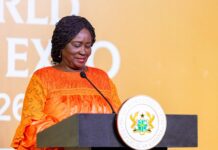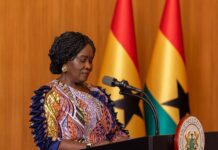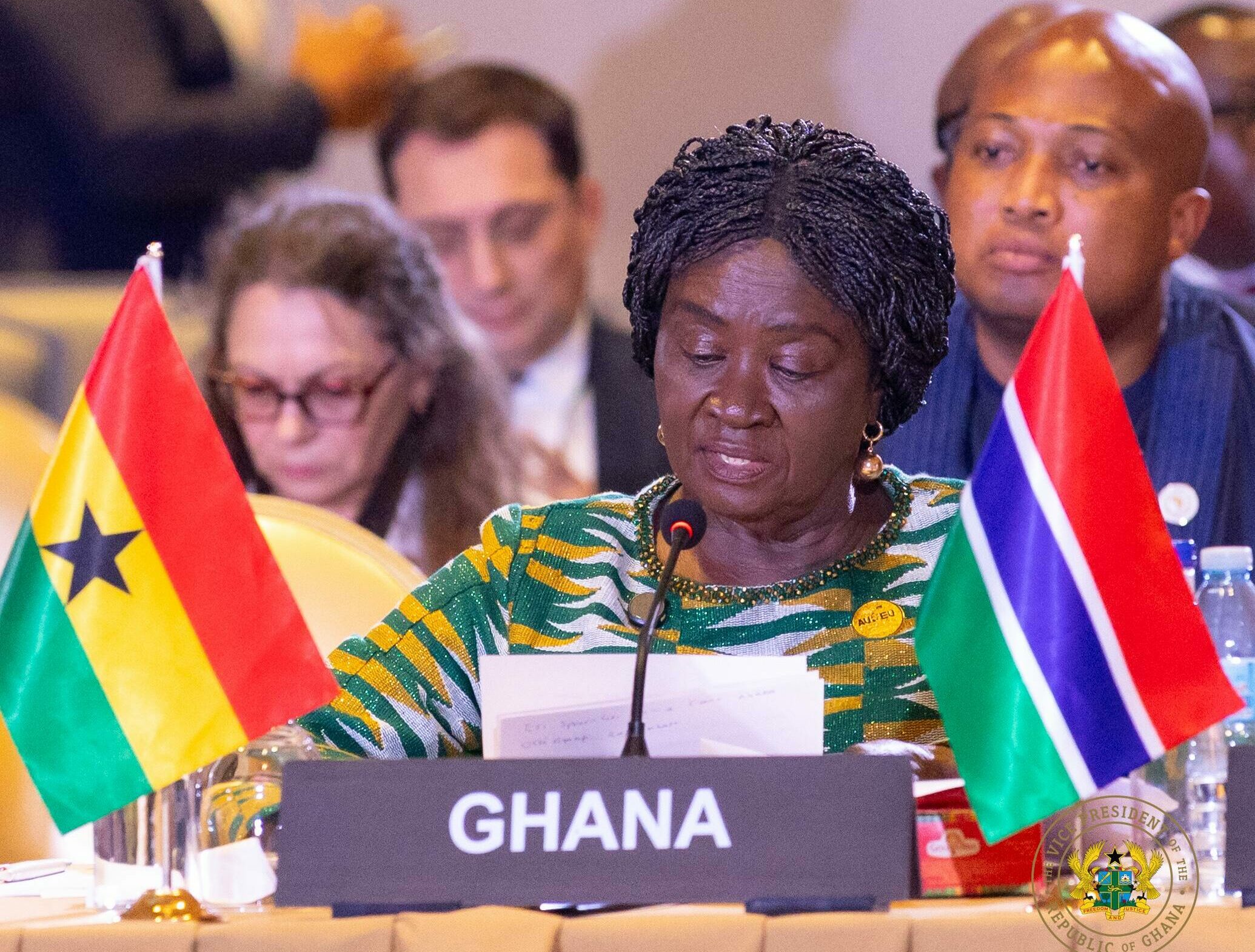

Vice President Prof. Jane Naana Opoku-Agyemang is calling for a permanent African representation on the United Nations (UN) Security Council.
She says the current composition of the Council defies the very democracy member states tend to preach, indicating the decades-old alienation of the African continent for key global decisions is long overdue.
According to her, the current global system of governance is unbalanced, arguing that the modern distribution of global power has completely outpaced the archaic frameworks of the mid-20th century.
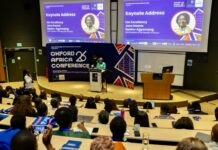
Prof. Opoku-Agyemang, addressing a distinguished audience at the Oxford Africa Conference 2026 on Saturday, May 16, 2026, made a case for Africa to be at the highest table of global decision making bodies.
In her speech at the Andrew Wiles Building of the University of Oxford, Professor Opoku-Agyemang tied the credibility of institutions like the United Nations directly to their willingness to reform.
Her call comes decades after calls from African leaders for permanent seats on the UN Security Council, a body still dominated by the victorious powers of the Second World War.
She noted that Africa has run out of patience in waiting for a permanent seat on the Council.
“If institutions and democracy are to remain legitimate, they must remain responsive to contemporary realities.
“For many African states, the continued absence of meaningful African representation within key global decision structures, particularly, the United Nations Security Council remains a source of growing imbalance between the distribution of global power and the structures through which that power is exercised.
“But legitimacy is shaped beyond representation. It is also shaped by outcomes,” she indicated.
The Vice President said it is not enough to just be represented at the UN if the global economy is not fair to developing countries.
She explained that African countries face tough economic challenges, like having to pay high interest rates to borrow money and struggling to get access to international funding.
These problems, she noted, stop governments from growing their economies, building things like roads and schools, and helping people escape poverty.
The two-day summit which will span between May 16 and 17, marks the 16th edition of the conference. Organised by the student-led Oxford University Africa Society, the annual gathering has grown into one of the university’s most influential, flagship Africa-focused forums, drawing together a formidable brain trust of academics, policymakers, corporate leaders, and development experts.
The theme for this year’s conference is “Anchoring Africa: Grounded Leadership in the Age of Disruption.”