
Natural Resource Governance Expert Richard Kojo Ellimah has questioned the timing and projected impact of the Environmental Protection Agency’s (EPA) new “Ionic Nano Copper” intervention.
He has described it as premature in the absence of a sustained halt to illegal small-scale mining, popularly known as galamsey.
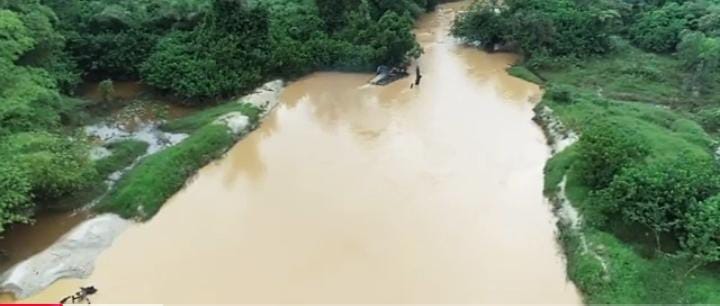
His concerns come as the Environmental Protection Agency rolls out a pilot water remediation exercise on the Birim River at Kyebi–Adukrom in the Abuakwa South Municipality of the Eastern Region.
The initiative forms part of broader national efforts to address the persistent degradation of major water bodies linked to illegal mining activities.
Ghana’s struggle with illegal mining has spanned successive administrations, with periodic crackdowns, taskforces and military-backed operations aimed at curbing the destruction of forests and pollution of rivers.
Despite these interventions, several water bodies — including the Pra, Ankobra and Birim river systems — have recorded elevated turbidity levels and contamination from heavy metals associated with alluvial gold extraction.
The EPA’s new intervention introduces Ionic Nano Copper technology as a pilot remediation tool. According to the Agency, the approach is designed to demonstrate scientifically guided methods of restoring degraded river systems while strengthening long-term water resource management.
Nano-copper applications in environmental science have been studied for their antimicrobial properties and their potential catalytic role in breaking down certain pollutants. In water treatment contexts, metal-based nanoparticles are sometimes deployed in controlled conditions to facilitate contaminant removal or sediment aggregation.
The EPA has positioned the project as a demonstration exercise intended to assess feasibility, scalability and environmental safety before any broader application.
Mr Ellimah acknowledges the scientific effort behind the initiative but questions its sequencing.

He argues that galamsey remains the principal driver of pollution in mineral-rich regions and that remediation efforts undertaken while illegal mining persists risk limited long-term impact.
“What is the root cause of the incessant pollution of water bodies in mineral rich areas? That is galamsey,” he stated. “Has galamsey stopped? Rather, we continue to see disregard for calls on perpetrators to desist, even in the face of crackdowns and destruction of machinery.”
He further questioned the reported cost of approximately $200,000 for the pilot, contending that the river restoration investments may not yield durable outcomes if fresh contamination continues upstream.
“If you spend that amount while the activity causing the pollution has not stopped what have you done?” he questioned, arguing that sustained enforcement against illegal mining would, in his view, need to precede large-scale remediation.
Environmental remediation of mining-impacted rivers typically involves a combination of source control, sediment management, chemical treatment and long-term watershed governance. International practice suggests that remediation programmes are most effective when accompanied by strong regulatory enforcement to prevent recurrent contamination.
Mr Ellimah argues that the EPA’s pilot therefore sits at the intersection of two policy tracks: enforcement against illegal mining and technical restoration of already-degraded ecosystems. While enforcement aims to prevent new pollution, remediation seeks to reverse or mitigate existing ecological damage.
He maintains that without demonstrable and sustained suppression of illegal mining operations, technological clean-up efforts risk becoming cyclical. He indicated that a post-enforcement restoration strategy would, in his assessment, present a more sustainable pathway.
The EPA has yet to publish full technical data from the pilot phase, including baseline contamination metrics, treatment protocols or projected timelines for measurable improvement. Such data are typically central to assessing environmental efficacy, cost-effectiveness and ecological safety of nanoparticle-based interventions.
Eric Yaw Adjei