
In a bid to empower the media with the right knowledge to build public confidence in vaccines, the national vaccine institute in partnership with the GHS, the WHO and the African Media and Malaria Research (AMMREN) network held a webinar on Strengthening Vaccine Communication in Ghana.
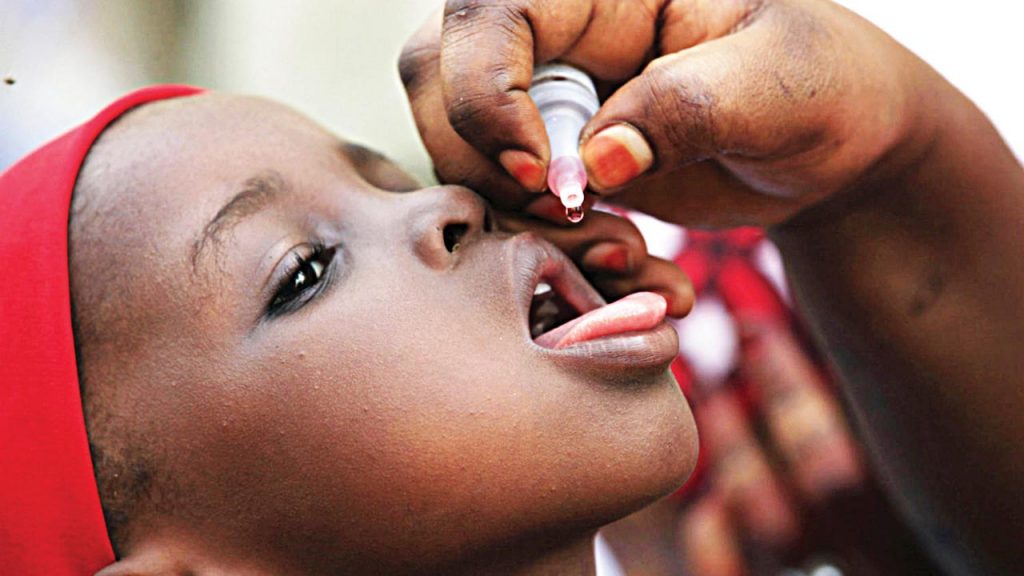
Vaccines remain one of the most effective public health interventions in human history that have saved millions of lives and continues to do so. Yet, the power of vaccines can only be realized when people trust and accept them.
According to the World Health Organization, vaccines have saved about 154 million lives in the last 50 years, most of them young children enabling societies to prosper.
In Ghana, the success of the Expanded Programme on Immunization, launched in 1978, is one of the country’s proudest public health accomplishments. Today, vaccination coverage exceeds 85% for most antigens, and child mortality from vaccine-preventable diseases has reduced significantly.

Ag. Chief Executive Officer of the National Vaccine Institute (NVI) Dr. Sodzi Sodzi-Tettey during the webinar said he strongly believes that science and communication must go hand in hand. And vaccine can only save lives when people understand, trust, and accept it.
He further noted that within the context of the President’s reset agenda, the NVI is seeing accelerated progress with focused guidance and direction to various actors in the vaccine production and manufacturing ecosystem.
‘‘Indeed, the vision of the President and the Hon. Kwabena Mintah Akandoh is to get concrete vaccine products out, most certainly before 2028. To this end, the NVI has recently seen a renewed sense of urgency. The NVI has strongly guided both Atlantic Lifesciences and DEK Vaccines Ltd to actively phase and prioritize high impact interventions that will produce tangible outputs sooner rather than later. Subsequently, vaccines like Tetanus Diptheria, and HPV and sera like Snake Venom Anti Serum and anti-tetanus have been prioritized by Atlantic Lifesciences in the short term.’’ He said.
Executive Secretary for the African Media and Malaria Research network (AMMREN) Dr. Charity Binka, on her part encouraged the media to be the champions of vaccine and must help to build vaccine confidence, seek out the facts, challenge misinformation and tell the stories that move hearts.

According to her misinformation, vaccine hesitancy, and limited understanding continue to threaten progress. Hence strengthening vaccine communication and building the capacity of the media remains crucial.
‘‘In recent years, misinformation and public mistrust have become major threats to vaccine confidence in Ghana and across the world. As recently as this month (October) some people were kicking against the HPV vaccine campaign in Ghana. This clearly shows that there is more work to be done.’’ ‘‘The media can be relied on as trusted voices and educators in pushing the vaccine agenda.
Journalists translate scientific data into human stories, hold leaders accountable for equitable access, and help dispel myths that endanger lives. To perform their role effectively, journalists need training, access to credible health information, and partnerships with public health experts. Building media capacity in vaccine uptake is therefore an investment in national health security.’’ She added.
Programme Manager for the Expanded Programme on Immunization at the Ghana Health Service, Dr Selorm Kutsoati noted that immunization is an essential component of Primary Health care, and the service seeks to protect children and pregnant women in Ghana against vaccine preventable disease.

She also noted that the numbers of children vaccinated have significantly increased although interventions have met some challenges.
‘‘The only challenge is that you know, as the years go by the denominator that we use to calculate the coverage increases. So, you may have two or three thousand extra children being vaccinated against, or be vaccinated in PCV one, but we will still end up with 7% because the numbers for the other children were supposed to be vaccinated this year,” she said.
There is no doubt that the future of Ghana and for that matter Africa depends on vaccines. That is why journalists are encouraged to go beyond communication to also confront the urgent reality of vaccine development.