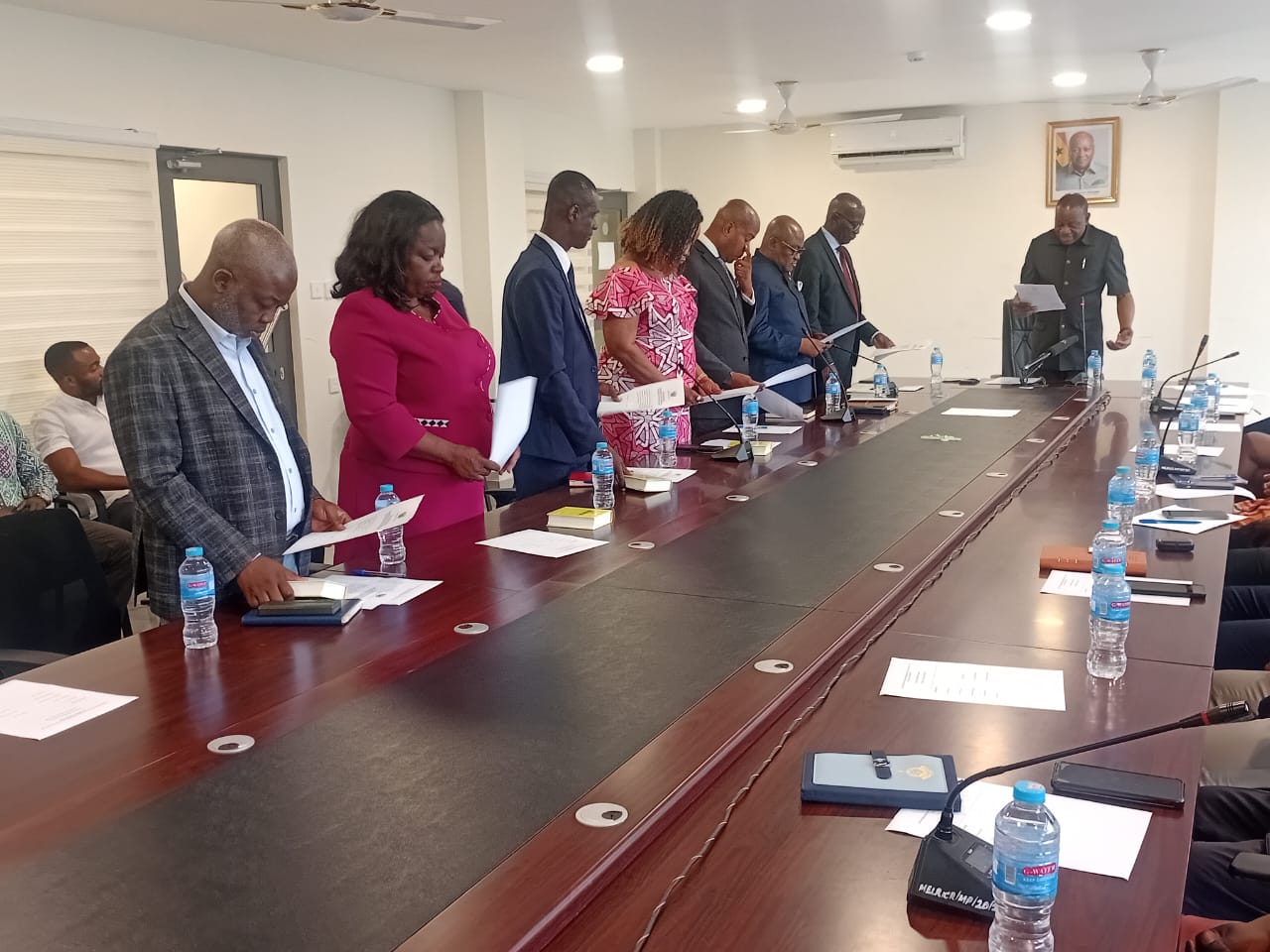

The Minister for Labour, Jobs, and Employment, Dr. Rashid Pelpuo, has officially inaugurated the new Board of the Fair Wages and Salaries Commission (FWSC) with a strong call to action: reduce labour agitations and oversee the Commission’s transition into an Independent Emolument Commission by the end of the year.
The Minister made the remarks during a brief ceremony in Accra on August 5, highlighting the board’s critical mandate in ensuring stability in the public sector pay system.
“In line with government policy, we are seeking to establish an Independent Emolument Commission as recommended by the Constitutional Review Commission,” Dr. Pelpuo said.

“This is very important to His Excellency John Dramani Mahama to ensure fairness and equity in wages and salaries within the public sector,” he said.
The Emolument Commission, once established, is expected to serve as a neutral body to address long-standing disparities in public sector pay and reduce recurring industrial actions by labour unions.

Dr. Pelpuo acknowledged the significant challenge that lies ahead for the Board but expressed confidence in their capacity to deliver.
“It is a herculean task for you to support the Commission to achieve its national goal. Fortunately, the Commission is led by no less a person than Dr. George Graham, an experienced hand in labour and wage matters,” he stated.

The Minister urged the Board to take swift and decisive steps to reduce strikes and discontent among public sector workers, noting the growing frustration over pay disparities.
“I believe in your expertise to curb industrial strike actions. We hope to wake up one day to a public sector free of agitations,” he added. “You must streamline things in such a way that labour-related concerns are addressed proactively and fairly.”

The newly inaugurated Board is expected to play a pivotal role in shaping the future of wage administration in Ghana, particularly at a time when public sector unions continue to demand better pay and working conditions.