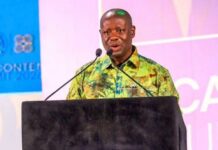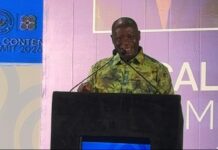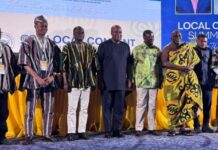

The President of the Western Regional House of Chiefs (WRHC), Nana Kobina Nketsia V, has reignited a blunt and uncomfortable conversation about the country’s mining sector.
He has questioned whether years of conferences, seminars and policy dialogues have delivered any meaningful change for the communities that host the country’s mineral wealth.
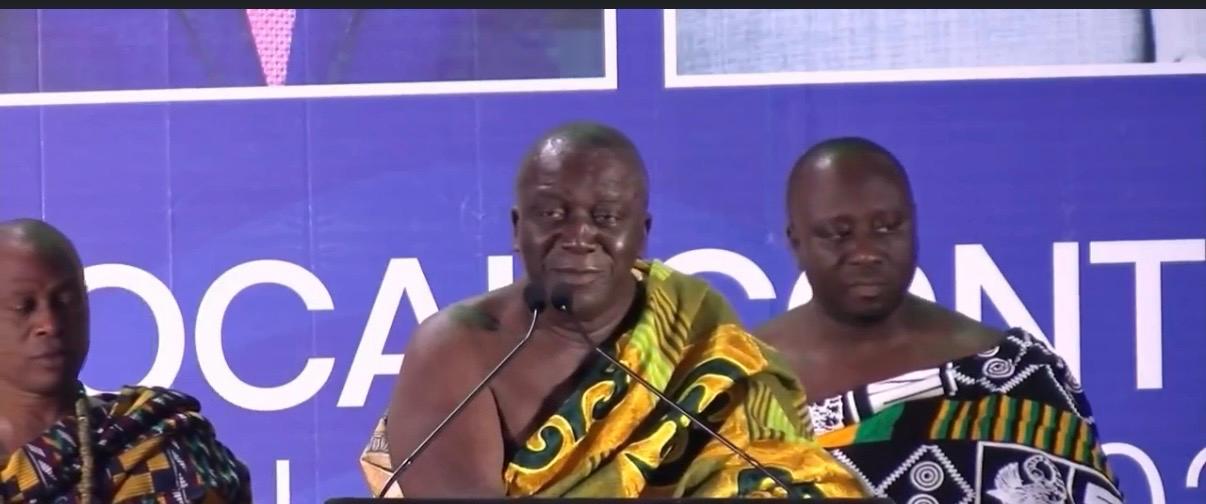
Speaking at the opening of the 2026 Local Content Seminar, Nana Nketsia V proposed a radical departure from business-as-usual — as the only force capable of driving a decisive shift in how Ghana benefits from its mining resources.
His remarks cut to a long-standing criticism of the extractive industry that while the country has no shortage of experts, reports and well-funded forums, it continues to struggle with translating talk into tangible development outcomes.

He described as “utter drudgery” the familiar pattern where experts gather for days, deliver polished speeches, consume public resources, and disperse — with little to show in terms of improved livelihoods for mining host communities.
Addressing participants under the theme “Strengthening Local Content and Indigenisation: Building a Resilient Mining Sector in Ghana,” Nana Nketia V warned that the seminar must rise above what he called “intellectual sterility,” insisting that history would judge stakeholders not by their eloquence, but by their impact.
“If you are not here for a revolution, then we might as well leave,” he emphasized.

Quoting the late Burkinabè revolutionary leader Thomas Sankara, Nana Nketsia reminded participants that “you cannot carry out fundamental change without a certain amount of madness,” urging stakeholders to be “mad for Ghana” in confronting entrenched interests and comfortable routines within the mining sector.
His desire comes against the backdrop of a mining industry that remains one of Ghana’s most significant revenue earners, yet continues to provoke questions about equity, value retention and development outcomes. While mining contributes substantially to exports and fiscal receipts, many host communities remain trapped in poverty, environmental degradation and limited economic opportunity.
“The wealth of the land must first feed the children of the land,” Nana Nketia V declared, echoing a sentiment widely shared across mining districts in the Western Region and beyond.
Referencing historic mining towns such as Tarkwa, Prestea, Bogoso, Nsuta and Obuasi, he described them not merely as geographical locations, but as foundational pillars of Ghana’s economic history. Yet, he lamented, decades of extraction have left little visible evidence of prosperity in many of these communities.
“The gold leaves, but it leaves poverty behind. It cannot go on like this,” he stressed — a refrain that has become emblematic of Ghana’s extractive paradox.
Drawing inspiration from Ghana’s first President, Dr Kwame Nkrumah, Nana Nketia V recalled the enduring phrase “the paradox of poverty in the midst of plenty,” arguing that the Western Region cannot continue to sit on immense mineral wealth while its people struggle with unemployment, poor infrastructure and limited social services.
He further invoked the example of Martin Luther, whose reform movement began on February 18, to illustrate that transformative change often demands courage, conviction and a willingness to challenge entrenched systems.
Nana Nketia V challenged stakeholders to draw a clear line between “investment” and “exploitation” in Ghana’s mining sector. True investment, he argued, builds capacity, uplifts communities and leaves sustainable development in its wake. Exploitation, by contrast, extracts value, exports profits and leaves behind environmental and social scars.
He underscored the importance of indigenous ownership and meaningful local participation, noting that stronger domestic linkages would reduce capital flight, deepen industrial capacity and ensure that mining contributes more directly to national development.
Eric Yaw Adjei