
The Ghana Health Service (GHS) has intensified its meningitis prevention and public education campaign following the death of two young boys in the Saboba District of the Northern Region.
The two victims, aged 6 and 16, reportedly died from suspected meningitis, bringing the total number of meningitis-related deaths recorded nationwide this year to five.
The Director-General of the Ghana Health Service, Dr. Samuel Kaba Akoriyea, described the loss as deeply painful, noting that the deaths could have been prevented with early detection and prompt medical care.

Meningitis, particularly Cerebrospinal Meningitis (CSM), remains a recurring public health challenge in northern Ghana, with outbreaks occurring mostly during the dry season. Between 2018 and 2020, a total of 118 meningitis-related deaths were recorded nationwide. Recent reports for 2025 indicate five deaths across three regions in the north.
“So far this year, we have unfortunately recorded five deaths two in the Northern Region here in Saboba, two in the Upper West Region in Nadowli and Jirapa, and one in the Savannah Region,” he disclosed.

Speaking during a visit to Saboba, Dr. Akoriyea stressed that meningitis continues to pose a serious seasonal threat in the northern part of the country.
According to him, reducing overcrowding, improving ventilation in homes and schools, and seeking early medical care can significantly reduce severe outcomes and fatalities.
He assured residents that government is taking proactive measures to prevent further deaths, adding that health facilities across the meningitis belt have been supplied with essential medications for treatment.
“Medications are available. No one should die of meningitis. Anyone who feels unwell should take their NHIS card and report immediately to the nearest health facility for early diagnosis and treatment,” he stressed.
The Director-General disclosed that about 57 suspected meningitis cases have been recorded nationwide so far this year, although the majority tested negative.
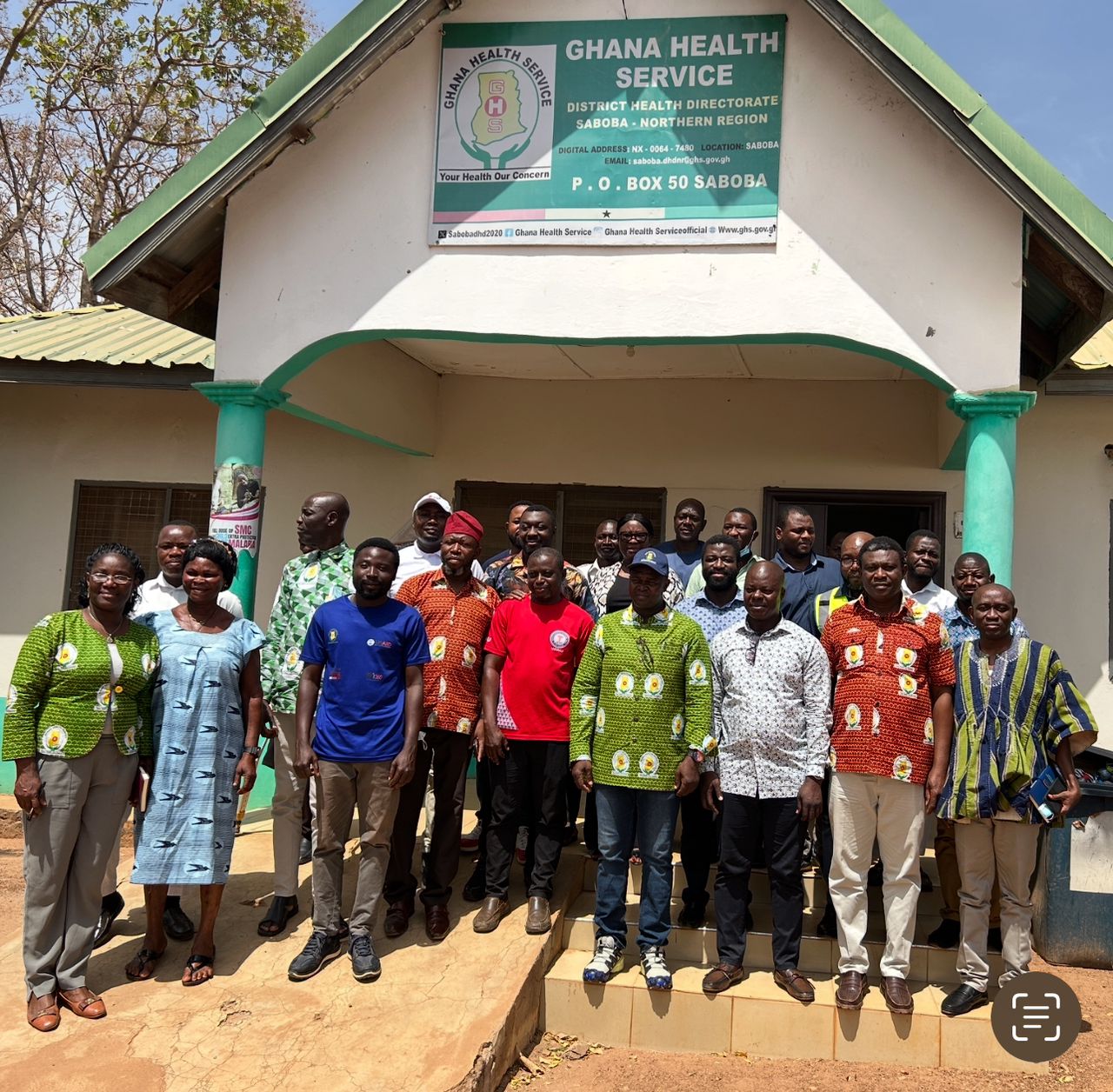
As part of intensified community engagement efforts, the Northern Regional Health Directorate has begun stakeholder engagements aimed at improving public awareness and early reporting of symptoms.
Dr. Akoriyea further encouraged health workers to strengthen collaboration with the media, traditional authorities and opinion leaders to enhance public education.
He also noted that the upcoming Mahama Cares initiative, which focuses on non-communicable diseases, would require extensive public sensitisation to ensure its success.
During the visit, the Director-General paid a courtesy call on the Paramount Chief of the Saboba Traditional Area, Uchabobor Bowan John Mateer Sakojim IV, and appealed to him to serve as a Regional Meningitis Ambassador to help promote preventive practices and reduce deaths.

He also commended the chief for his role as a member of the Regional Health Committee.
In response, the Paramount Chief expressed appreciation to the District Health Director and staff for their dedication and sacrifices. He described the deaths as tragic and noted that the Director-General’s visit is both timely and reassuring.
The Chief urged the District Health Directorate to intensify public education and called on residents to take preventive measures seriously. He pledged his full support to ensure the successful implementation of all health projects in the district.
Residents in affected communities have been advised to stay hydrated, seek immediate medical attention when symptoms appear, and reduce exposure to excessive heat and dust, particularly during the peak dry season.
By Nadra Mohommed