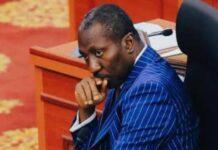

Private legal practitioner and legal commentator, Austin Kwabena Brako-Powers, has dismissed claims that vote buying during internal political party elections constitutes a criminal offence.
He argued that political parties are not public institutions in the same category as constitutionally created bodies such as the Electoral Commission (EC) and the Commission on Human Rights and Administrative Justice (CHRAJ).
His comments come amid heightened public debate following allegations of vote buying during recent internal party elections, with some political actors insisting that such practices fall within the ambit of the Criminal Offences Act, 1960 (Act 29).
Reacting to a claim by Abass Nurudeen, the Ashanti Regional Communications Officer of the governing National Democratic Congress (NDC), Mr Brako-Powers stated that the Supreme Court decision in The Republic v Yebbi & Avalifo has been wrongly interpreted and does not support the conclusion that political parties are public institutions.
Mr Nurudeen had argued that the apex court’s decision effectively brings political parties under the provisions of Act 29, which criminalises vote-buying in public elections, thereby making alleged inducements during party elections unlawful.
However, Mr Brako-Powers maintained on TV3’s Big Issues on Tuesday, February 10, 2026, that such an interpretation is legally unsustainable, stressing that no existing law criminalises vote buying during internal party contests, primaries, or internal electoral processes.
“If vote-buying during internal party elections were criminalised under our laws, the obvious question would be why there has been no single prosecution so far,” he argued, noting that legality must be grounded in clear statutory provisions, not public sentiment.
According to him, political parties, despite their public relevance, do not qualify as public institutions in the strict constitutional or statutory sense, and therefore cannot be equated to bodies like the EC or CHRAJ, which are expressly established by the Constitution.
Mr Brako-Powers further explained that the Supreme Court’s decision in Republic v Yebbi & Avalifo does not directly address the institutional status of political parties, warning against lifting portions of judgments out of context to support sweeping legal conclusions.
“Sometimes when you read a case, you must let the words sink in,” he stated, adding that proper legal analysis requires interrogating the facts, issues, and holdings of a case, rather than relying on broad or convenient interpretations.
He emphasised that a clear understanding of the distinction between ratio decidendi—the binding principle of a case—and obiter dictum—statements made in passing—is fundamental to legal reasoning and professional survival in legal practice.
Mr Brako-Powers cautioned that conflating political outrage with criminal liability risks undermining legal certainty and the rule of law, insisting that criminal offences must be expressly created by Parliament and strictly construed.
He concluded by urging political actors and commentators to engage the law with precision and restraint, noting that while vote-buying during party elections may be morally reprehensible, addressing it requires legislative reform, not the misapplication of existing criminal statutes.