
Professor Henry Kwasi Prempeh, Chairman of the Constitution Review Committee (CRC), has explained that his Committee chose not to address the Attorney-General and the Ministry of Justice in its recommendations because “there isn’t any conflict there.”
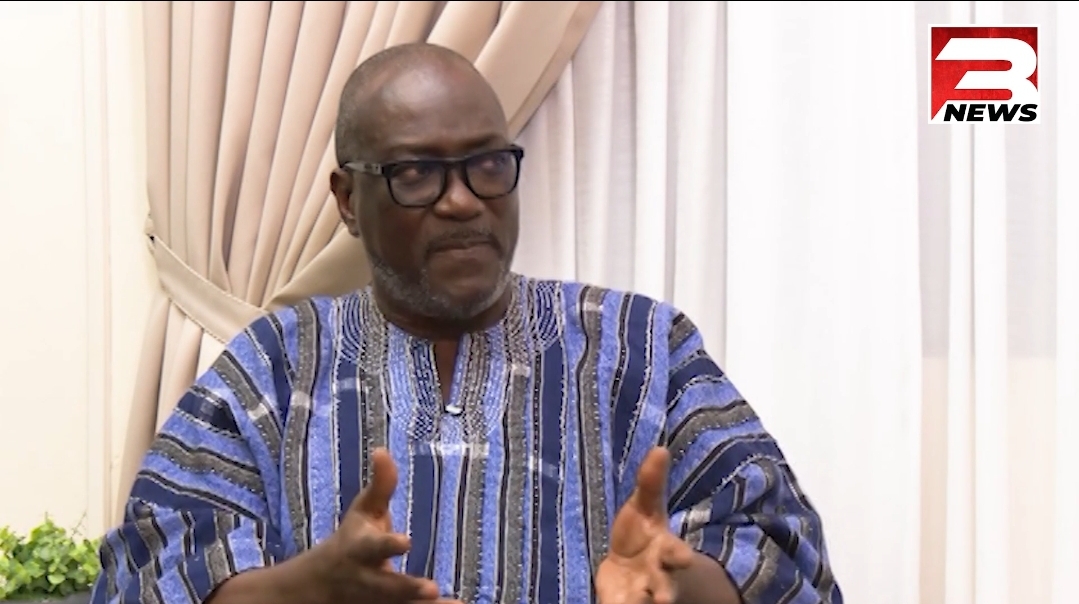
In an exclusive interview with TV3’s Keminni Amanor aired on Tuesday, December 23, 2025, Prof. Prempeh stated that the two institutions are functioning effectively, which eliminated the need for any suggestions for change.
The CRC officially submitted its final report to the Presidency on December 22, 2025. The committee, comprising eight members and chaired by Prof. Prempeh, was tasked with identifying gaps in the 1992 Constitution and making actionable recommendations for democratic reform.
Prior to the establishment of the committee, there were calls for the roles of Attorney-General and Minister of Justice to be separated, with a public servant serving as Attorney-General and a government appointee serving as Minister of Justice.
Prof. Prempeh’s comments were made in the context of discussions around what he terms as “constitutionalising the OSP,” referencing the recent controversy surrounding the Office’s constitutionality and prosecutorial powers.
The Committee made some recommendations in its report to cure the milieu between the OSP and the Officer of the Attorney-General. In his comments, Prof. Prempeh said “the real problem [with the A-G and the OSP] is a prosecutorial power problem.”
He emphasised that decisions to discontinue cases should be accompanied by publicly disclosed reasons, rather than being influenced by personal relationships with suspects.
“We’re saying that regardless of who holds prosecutorial power, whether the AG or OSP, if a case is discontinued, reasons should be given. Public reasons should be provided for discontinuing a case, to prevent the practice of discontinuing cases simply because of familiarity with the suspect,” he explained.
Prof. Prempeh stressed the importance of “sanitizing the space” to ensure that Ghana’s institutions, though sound in principle, are free from systemic flaws. “We may have institutions that are fundamentally sound for our democracy, but there may be aspects of the system that need to be addressed and corrected,” he added.
Here is the full report of the Constitution Review Committee