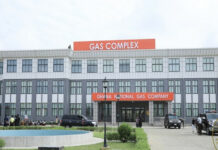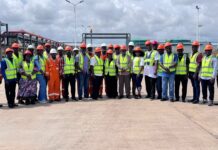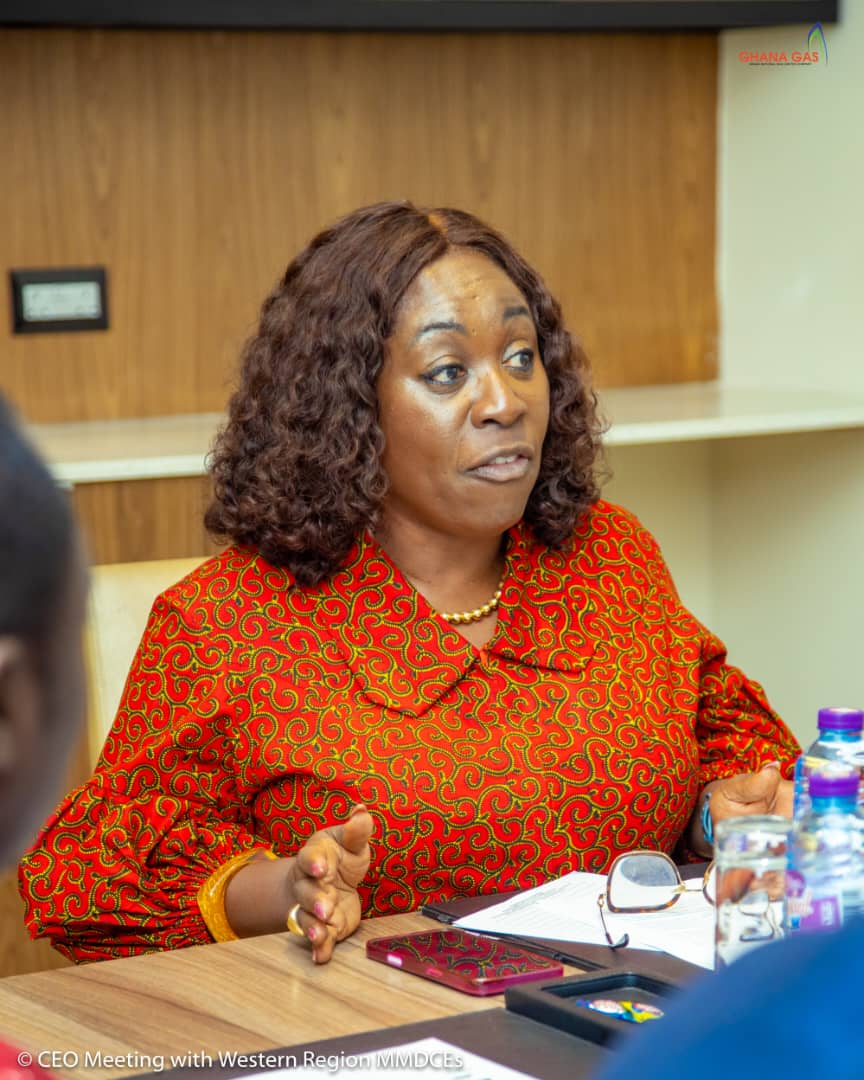

Chief Executive Officer of the Ghana National Gas Company Limited Judith Adjobah Blay has underscored the company’s vow to positioning itself not merely as an operator, but as the main architect of the country’s gas-driven future.
With natural gas now the cornerstone of the country’s energy mix, the company has reaffirmed its unbridled commitment to investing in strategic infrastructure that guarantees the continuous supply of raw gas, a move she considers as critical to cushioning the economy against shocks associated with rising demand for power and industrial energy.
Speaking on behalf of Chief Executive Officer Judith Adjobah Blay at this year’s Local Content Conference, the Deputy CEO for Finance and Administration, Rene Nelson, said Ghana Gas recognises the petroleum value chain — especially the upstream segment — as “the lifeblood of the country’s energy market,” with natural gas taking center stage in the country’s gradual transition toward a cleaner fossil fuel economy.
And as evidence of its march to becoming a powerhouse in the supply of natural gas, even beyond the country, Ghana Gas has commenced a series of expansion works.
“Beyond the existing Western Corridor Gas Infrastructure, which has served as a vital conduit for gas offtake, Ghana Gas has mapped out several strategic projects, including the Takoradi–Tema Pipeline, Gas Processing Plant (Train II), and the Mainline Compressor Project. These investments are designed to enhance gas evacuation capacity, ensure operational reliability, and guarantee a consistent supply for both domestic and industrial use.”
Since its inception, Ghana Gas has evolved from a midstream processor into a strategic player in the West African gas offtake space, facilitating the delivery of lean gas for power generation and industrial development. Its Western Corridor Infrastructure — linking the Atuabo Gas Processing Plant to Aboadze and beyond — has been the backbone of Ghana’s power generation mix, supplying key independent power producers (IPPs) and state plants.
But the company’s next phase of growth is clearly regional in scope. The Takoradi–Tema Interconnection Project, for instance, will not only bridge supply between the western and eastern power enclaves but also open a potential export window, positioning Ghana as a reliable gas hub for the sub-region.
Even as Ghana Gas expands its infrastructure footprint, the sustainability of these investments hinges on the continuous flow of raw gas and Judith Blay is guided by the fact that feedstock security remains “the ultimate determinant” of system reliability.
She has thus rallied government, upstream operators, regulators, and investors to collaborate in ensuring a stable supply base, reminding stakeholders that “without a long-term gas guarantee, the promise of energy self-sufficiency could quickly evaporate.”
This year’s Local Content Conference, themed “Revitalising Ghana’s Petroleum Exploration and Production Sector: Driving Innovation and Redefining Local Content for a Competitive Energy Economy,” is coming at a time where Ghana Gas has quietly become the poster child of what genuine local participation looks like in practice.
Today, the company is 100 percent operated by Ghanaian professionals, with indigenous contractors increasingly handling complex engineering and maintenance operations that were once the preserve of foreign firms.
“This is a story worth amplifying. Ghana is not only building capacity; we are building confidence, competence, and credibility. We are demonstrating that Ghanaian professionals and enterprises can stand shoulder to shoulder with the best in the global petroleum industry when the required support is provided.”
She believes that local content should not be a checkbox requirement, but rather a strategic pathway to national development, one that anchors job creation, technology transfer, and industrial self-reliance.
The Local Content Conference powered by the Petroleum Commission continues to serve as a learning and collaborative platform for industry players to share innovations and co-create solutions to sectoral challenges. For Ghana Gas, participation in such fora is not ceremonial; “it is an affirmation of its belief that Ghana’s energy future will be defined by partnership, innovation, and local ingenuity.”