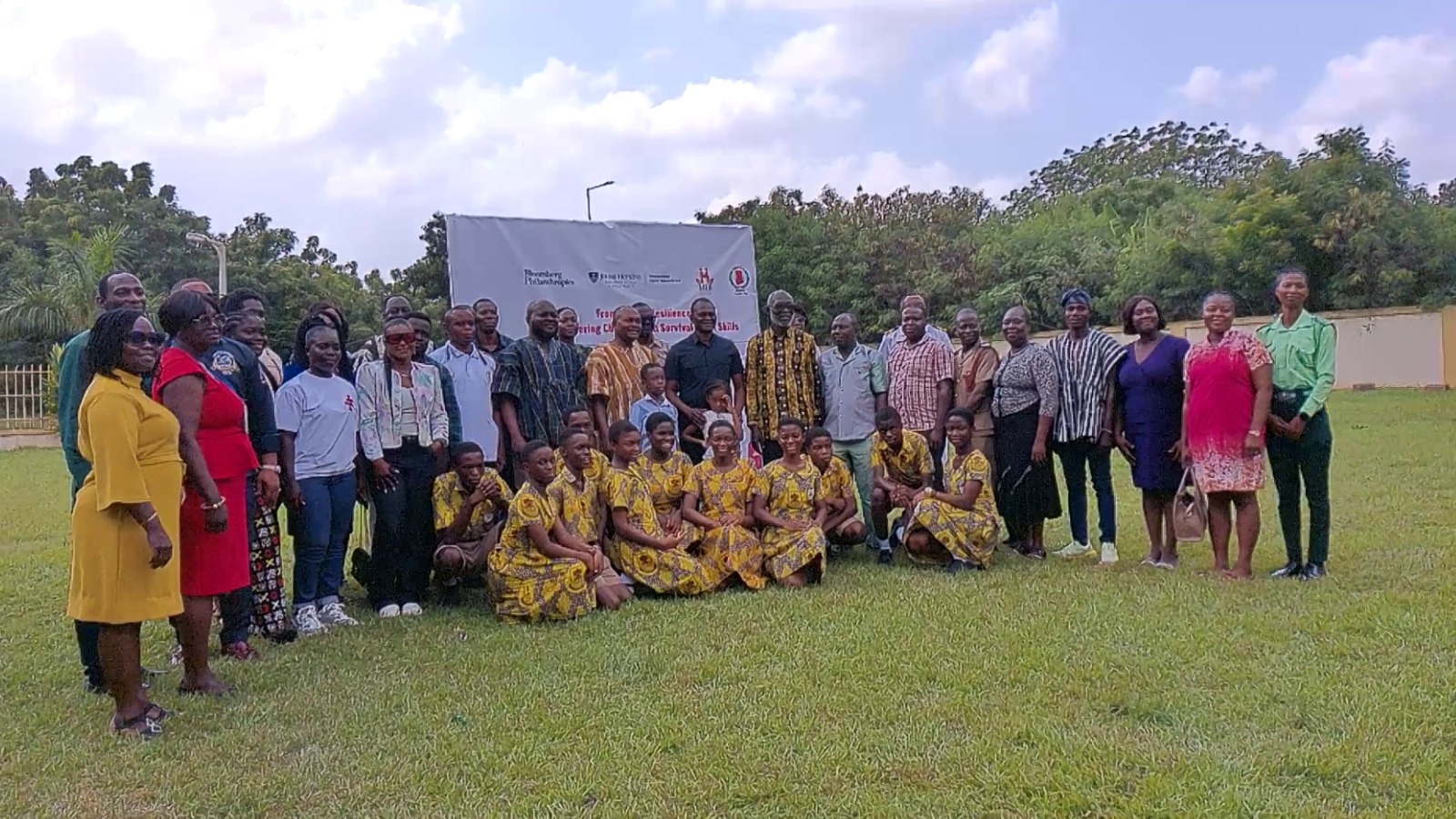

Life Partners Platform has teamed up with the National Disaster Management Organization (NADMO) to teach 1,000 children how to swim in 2026, aiming to prevent drowning incidents.
The initiative focuses on equipping kids with crucial lifesaving skills.
The initiative of teaching children survival swimming skills is just an activity, but a national call that the live of every child matters, that drowning can be prevented hence must not be accepted in every society.
It is with this regard that 1000 children will be trained to prevent the countless lives that the tragedy causes.
In coastal and inland communities across Ghana near the sea, lagoons, rivers, ponds, drains and streams children are exposed daily to water related hazards.
Every life lost to drowning is a tragedy and every child who sinks beneath the water and does not rise represent a failure of the system.
The training will be in two approaches, where the children will be trained in swimming pools as well as natural water bodies which is crucial to strengthen their survival competence.
For the initiative to be successful ten instructors have been trained by the University of Ghana Sports and Wellness directorate and these instructors are staff from the National Disaster Management Organization, staff who are committed to emergency response reduction.
The partnership is very symbolic and crucial that reflects policy relevance to demonstrate drowning prevention must be integrated into national emergency preparedness systems as well as deepens government –private collaboration that translate into national resilience.
The completion of the training marks a major policy milestone for the first time where nationally trained instructors are supporting school and community-based survival initiative.
The initiative is led by life partners platforms with strong technical support from Bloomberg School of Public Health at John Hopkins University through their guidance and expertise have shape the program into a model that aligns with international best practices.
For accessibility and relevance of the initiative, the training phase will be delivered across three chosen venues including the University of Ghana Legon Swimming Pool, the Crystal Height International School Swimming Pool at Sapeiman.
The decision to train one thousand students is deliberate and strategic in building a national model for school based drowning prevention.
These one thousand children will become ambassadors of water safety in their schools and communities which will be scaled out across the sixteen regions of Ghana.
Under the guidance of the trained instructors, participating students will gain a deep understanding of water safety principles, the ability to identify dangerous water conditions, skills for safe out-of-water rescue, and basic first aid and CPR awareness.
Notwithstanding, the students will also receive foundational survival swimming skills, water surface floating, self-rescue, and reaching safety.
Director General of NADMO, Major (Rtd) Dr. Joseph Bikanyi Kuyon, says the move aims to change the narrative. He cited that drowning has taken many lives and needs to be tackled in generation approach.
He said he will commit to supporting the initiative with any available resources to make the dream come through.
Life Partners Platform’s Kofi Koranteng Abrokwaa notes the alarming number of children drowning deaths, highlighting the need for intervention.
“Drowning prevention requires more than passion; it demands policy commitment. It calls for integration of swimming into school curricula, the strengthening of emergency response systems, and the development of safe aquatic facilities nationwide,” he said.

The project lead at NADMO, Dr. Alberta Kusim, calls for deliberate policy changes to address the issue.
She said drowning is taking lives that will be needed to build the nation, hence the need for collaboration.