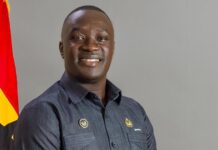
Vice President of IMANI Africa, Bright Simons, has questioned the Narcotics Control Commission’s (NACOC) claim that the recent cocaine bust at the Beirut Airport in Lebanon was part of a coordinated controlled delivery operation with Ghana.
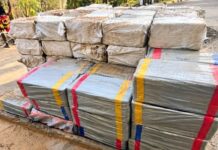
His comments come on the back of the arrest of a Syrian, identified only by his initials B.H., at the Rafic Hariri International Airport in Beirut on Saturday, October 31, 2026, after arriving from Accra with about 40 kilogrammes of suspected cocaine concealed in two suitcases.
The seizure has been described by Lebanese Customs as the largest passenger drug bust in the airport’s history.
In a statement issued on Sunday, November 1, NACOC said the arrest was the result of a “coordinated controlled delivery exercise, carried out through close operational cooperation between Ghanaian and Lebanese drug law enforcement authorities.”
The Commission’s Acting Director of Public Affairs and International Relations, Francis Opoku Amoah, has also disclosed on Joy FM on Monday, November 2, that NACOC had monitored the suspect throughout his stay in Ghana, including his arrival, hotel accommodation and departure, to target a wider international network.
“Controlled delivery is where you know about the person, what the person is carrying, but you want the person to go to the other side because when the person gets to the other side, the person, not him alone but the network associated with him, will be arrested,” he explained.
However, Bright Simons in a detailed post on X on Monday, November 2, 2026, indicated that the explanation does not add up.
According to him, the account from Lebanese authorities attributes the operation to Lebanon’s General Security and Customs following security monitoring and intelligence gathering, without mentioning Ghana or Lebanon’s anti-narcotics branch, the Internal Security Force (ISF).
He noted that in previous international drug operations involving Lebanon and countries such as Saudi Arabia, Qatar, Kuwait and the United Arab Emirates, Lebanese authorities prominently acknowledged the involvement of its anti-narcotics unit.
However, the absence of such acknowledgment in the current case, Simons noted, raises questions about whether the operation was jointly planned from the outset.
He also cited a report by Lebanese broadcaster LBCI that the suspect allegedly paid a bribe at the Kotoka International Airport to facilitate the checking in of the two suitcases, questioning how such a payment could occur under NACOC’s supervision in a controlled delivery.
Simons further pointed to preliminary investigations by Lebanese Customs which indicated that the suspect had entered Lebanon from Syria through the Masnaa land border weeks before traveling to Accra, suggesting he may have already been under surveillance by Lebanese authorities before his trip to Ghana.
He further questioned why NACOC is yet to announce arrests of accomplices in Ghana, including customs and aviation security officials allegedly involved, if the consignment was allowed to leave under supervision.
The policy analyst called for a joint statement from NACOC and Lebanon’s Internal Security Forces to clarify the circumstances of the operation.
I was about to heave a big sigh of relief after reading a statement by Ghana's narcotics authorities (NACOC) about a joint operation with their counterparts in Lebanon (see attached) that has led to Lebanon's biggest airport luggage drug (cocaine) bust.
Then I looked again,… pic.twitter.com/cPoY1zJNT7
— Bright Simons (@BBSimons) November 2, 2026
Meanwhile, NACOC has said it is pursuing suspected accomplices in Ghana as part of ongoing investigations.
NACOC confirms arrest of Syrian at Beirut airport with 40kg suspected cocaine from Accra