
Economist Professor Patrick Assuming has cautioned the government against initiating road infrastructure projects if they cannot be funded.
He stated that it could increase the debt burden on government.
Speaking on TV3’s Business Focus on July 28, Prof Assuming said “while key economic indicators suggest progress, Ghana is still in a vulnerable position and must proceed carefully with large-scale capital projects”.
“We should not rush and build roads we cannot finance,” he said. “The economy may be improving, but we are not out of the woods yet.”
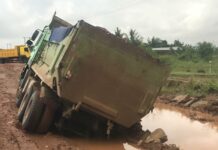
His comments were based on the Ministry of Finance issuing commitment authorisations for 32 road infrastructure projects, including several previously abandoned ones.
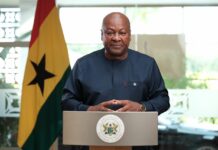
These projects are being implemented under the Big Push Programme, a flagship initiative introduced under the President John Dramani Mahama aimed at accelerating infrastructure development across Ghana.
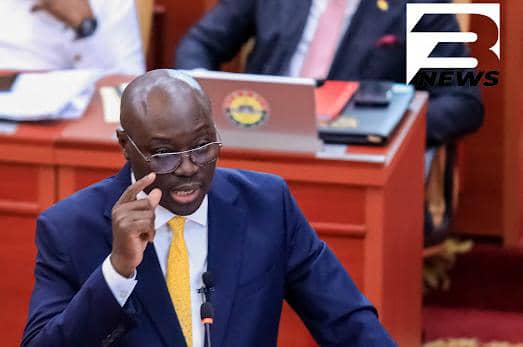
The Minister during the mid-year budget review said that the projects will be rolled out with budgetary support over the next two years to improve road connectivity and stimulate growth.
While infrastructure remains key to Ghana’s long-term development goals, economists and fiscal analysts warn that project financing must align with debt sustainability efforts to avoid placing further strain on public finances.
In a related development the Finance Minister, Dr Cassiel Ato Forson has announced a bold new national reset strategy in the mid-year budget, unveiling the 24-Hour Economy and Accelerated Export Development Programme—an ambitious initiative aimed at boosting production, creating sustainable jobs, and modernising the economy. Central to this plan is the Volta Economic Corridor, a transformative project inspired by Dr. Kwame Nkrumah’s original Volta vision.
Addressing Parliament, the Finance Minister said that President John Mahama officially launched the initiative earlier this month. The 24-Hour Economy and Accelerated Export Development Programme is designed to reduce Ghana’s dependence on imports, expand local production, enhance market access, and build a competitive, skilled workforce suited for a dynamic global economy.
At the heart of this agenda is the Volta Economic Corridor—described as a game-changer for Ghana’s industrial and logistical future. The project aims to harness the economic and environmental potential of the Volta Lake and its surrounding regions, repositioning it as a key growth pole in the country’s development journey.
“The Corridor revives and expands on Dr. Kwame Nkrumah’s vision of the Volta Project as a hub for agro-industry, trade, and transport—now adapted to today’s economic realities and regional opportunities,” the minister noted.
The programme will be delivered through four main pillars:
- Grow24: Targets over two million hectares of irrigated farmland for all-year-round agriculture, moving away from traditional seasonal farming;
- Make24: Establishes agro-industrial parks focusing on textiles, pharmaceuticals, and food processing;
- Show24: Develops tourism clusters and hospitality hubs around the Volta Lake to drive the tourism sector;
- Connect24: Converts the lake into a major inland water transport route to reduce haulage costs and link all corners of Ghana.
To support this transformation, the Ministry of Finance will in the 2026 Budget introduce targeted incentives aimed at attracting private investment, encouraging enterprise growth, and generating decent, well-paying jobs. The government, the minister stressed, will act as a facilitator and not dominate the private-led initiative.
“This is about resetting the economy for the Ghana we want,” the minister declared, positioning the Volta Economic Corridor as a cornerstone of a modern, self-reliant, and globally competitive Ghana.