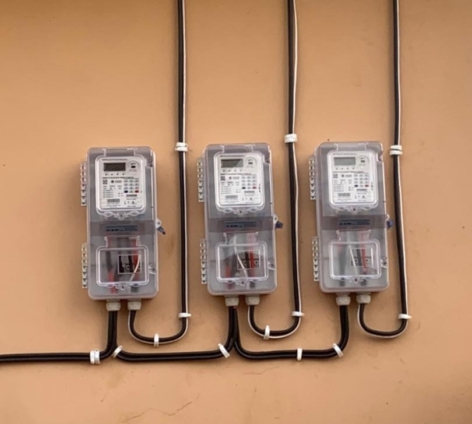

The Minister of Energy and Green Transition, John Abdulai Jinapor, has announced that an impartial investigation will be conducted to determine the root cause of complaints about rapid depletion of units in electricity meters.
The Minister made this known following widespread concerns from consumers.
Speaking during the commissioning and inspection of the MBH meter manufacturing factory on Wednesday, February 25, 2026, he revealed that he has directed the Electricity Company of Ghana (ECG) and the Northern Electricity Distribution Company (NEDCo) to investigate and deliver a report within seven days.
“We need to investigate it first. It’s too early to conclude that the meters have been tampered with. I’ve tasked the team to conduct an impartial investigation so that when the report is ready, we can make an informed decision. I appeal to customers to remain calm, we are here to serve them, and governance means resolving challenges fairly,” Jinapor said.
He added that if the investigation confirms that some meters are faulty, immediate replacement will follow. He further assured that consumers who may have been overcharged will be compensated.
“If some meters are faulty, they must be replaced immediately. And if it turns out that people have overpaid, we will find a way to compensate them. We are working closely with the PURC, the Energy Commission, and all relevant agencies to ensure this matter is resolved in a fair and transparent manner,” he emphasized.
Meanwhile, the Director of MBH Ghana, Niket Goil, highlighted the benefits of the newly commissioned factory.
He noted that the facility has the capacity to produce 750,000 meters annually, which will create jobs, reduce power theft, and strengthen Ghana’s energy sector.
“The meters being produced will play a consequential role in reducing power theft and ensuring proper inflows across the distribution and generation value chain,” Goil stated.
The commissioning of the MBH factory marks a significant step in Ghana’s energy transition agenda, with emphasis on local manufacturing, job creation, and improved reliability in electricity supply.
By Beatrice Sowah