
The Minority in Parliament is demanding an urgent probe into the Bank of Ghana’s $214 million losses.
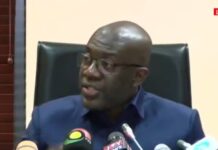
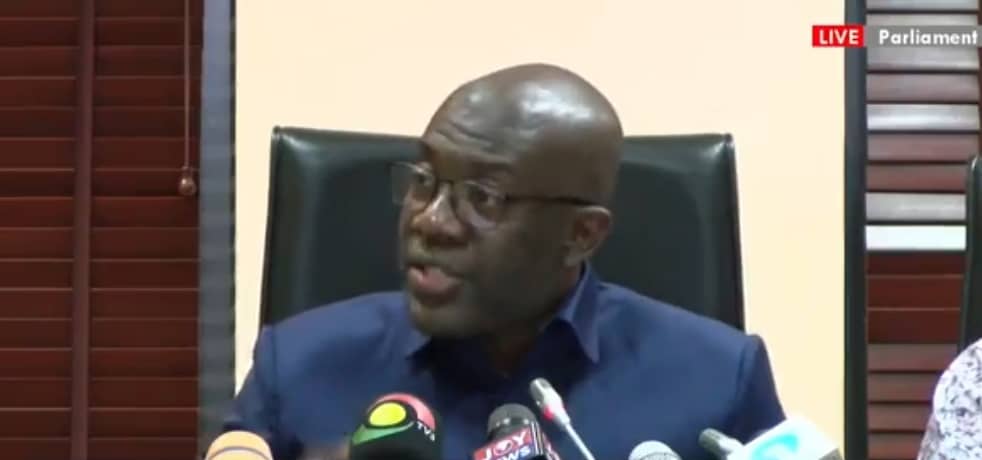
Addressing a press conference on Monday, December 29, the Member of Parliament for Ofoase Ayirebi, Kojo Oppong Nkrumah, called for an urgent bipartisan committee to inquire into this matter.
He said, “The IMF has already mentioned that 214 million dollars worth of trading losses have been occasioned in the first nine months of this year. As a caucus, when we round our numbers, we can project that it is going to get to about 300 million dollars by the end of this year. $214 million losses under the gold for revenues is just nine months, but there are a few issues under that that we will want to draw your attention to.
“First is to explain to you how these losses are being occasioned. Small-scale miners will not sell unless they are paid through global market prices, even if a slight discount is given to them and at an exchange rate which the forex bureaux use. The goldbod, therefore, has to pay miners at real market value. However, goldbod then sells dollars it receives from offshore buyers back to the BoG at a BoG or interbank rate, which is a weaker rate. Goldbod protects its host by passing the exchange rate losses directly onto the BoG. So this is not a market fluctuation problem. This is a system that is designed to make losses, and the state to bleed, so the intermediary will remain secure and profitable.”
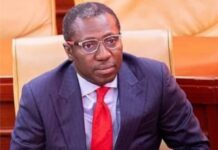
Earlier, a Development Economist, Dr Frank Bannor, also said that the Bank of Ghana and the GoldBod owed Ghanaians an explanation on the $214 million losses.
Dr Bannor stated that this money could have been used to employ the over 150,000 health workers sitting at home, and also be used to pay the one-year salaries being owed to teachers!
Reacting to a statement issued by the BoG clarifying reports of the losses, Dr Bannor said in a statement that “Whoever issued that statement on behalf of the BoG should bow his head in shame! Is the BoG saying that it was not privy to the IMF fifth review report and the contents therein? Why didn’t they protest in their final engagement with the IMF?
“The BoG and Goldbod owe Ghanaians an explanation as to why the country has lost a whopping amount of 214 million dollars! This money could have been used to employ the over 150,000 health workers sitting at home! Additionally, it could also be used to pay the one-year salaries being owed to teachers!”
The Bank of Ghana (BoG) had said that reports that it made losses due to GoldBod operations are speculative. The IMF had flagged the reported losses as a potential downside risk to Ghana’s broader macroeconomic stabilisation efforts, attributing them to transactions involving artisanal and small-scale mining (ASM) dore gold, as well as what it described as “GoldBod off-taker fees”.
While some structural reforms have faced delays due to their complexity, the report confirms that the macroeconomic environment has improved markedly, it said.
The central bank added that real GDP growth has exceeded expectations, inflation has declined faster than projected into the Bank of Ghana’s target range, and international reserves are expanding steadily.
Tentative data from Bank of Ghana as of mid-December 2025 suggest that international reserves could exceed US$13 billion by end-2025, contributing to rising confidence in the economy, it further said.
“The new foreign exchange operations framework introduced by the Bank of Ghana was also highlighted in the IMF report as a critical reform. Designed in line with global best practices, the framework clarifies intervention triggers, separates reserve accumulation from market intermediation, and enhances transparency, all aimed at deepening confidence in FX markets. The functioning of this framework is closely tied to the stability and efficiency of GOLDBOD’s operations, reinforcing the need for continued oversight and operational discipline,” the BoG said.
Recognising both the macroeconomic benefits and fiscal costs of the DGPP, it added, the Board of the Bank of Ghana recently approved reforms to improve pricing and operational efficiency in the downstream segment of the programme.
“These reforms will be rolled out beginning January 2026, in line with budgetary provisions made in the 2026 national budget to fully resource GOLDBOD, ensuring its sustainability as it evolves. Priorities will include reducing intermediation fees, improving cost-efficiency, and achieving competitive, yet economically sound buying prices, with benefits for both the sector and broader economy.
“Finally, the Bank of Ghana is currently undergoing its annual external audit. As such, any figures reported in relation to losses from gold operations in 2025 remain speculative. The Bank’s audited financial statements, including all relevant disclosures will be published next year in accordance with statutory requirements,” the BoG said in a statement.